Why Choose Linear Motor Drive for Your Automation Needs?
In an ever-evolving industrial landscape, manufacturers face constant pressure to enhance precision and efficiency. The choice of technology directly impacts productivity. One innovative solution gaining popularity is the linear motor drive. This technology offers unique advantages that traditional motors cannot match.
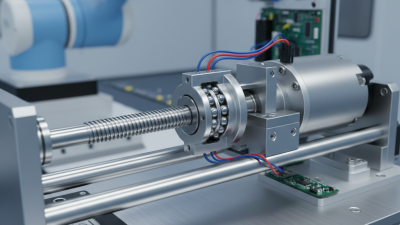
Linear motor drives provide direct motion control. They eliminate intermediary components, reducing wear and tear. This leads to higher reliability and less maintenance. As industries seek to automate processes, linear motor drives emerge as a viable option. They are particularly effective in applications requiring high speed and accuracy.
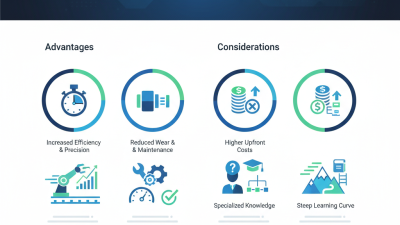
However, the adoption of linear motor drive systems isn’t without challenges. Initial costs can be higher than traditional alternatives. Some businesses may hesitate, fearing the complexity of implementation. Despite these concerns, the long-term benefits often outweigh the drawbacks. Companies must weigh their unique circumstances when considering linear motor drives for automation needs.
Benefits of Linear Motor Drives in Automation Applications
Linear motor drives are revolutionizing automation applications. These systems offer precise positioning and high speeds. Manufacturers are choosing them for their efficiency and reliability. With no mechanical contact, wear and tear is minimized. This can lead to lower maintenance costs over time.
One significant benefit is the compact design of linear motors. This allows them to fit into tighter spaces. In high-tech environments, size can be a crucial factor. Another advantage is the consistent force they provide. Variations in load do not affect their performance as much. However, it's important to consider that effective implementation requires careful planning and system integration.
While linear motor drives have many benefits, they are not always the perfect solution. Initial costs can be higher than traditional methods. This investment might not pay off for every application. Users should weigh features against costs. Understanding your specific needs will guide you to the best decision. Keeping these factors in mind can lead to successful automation outcomes.
Benefits of Linear Motor Drives in Automation Applications
This bar chart illustrates the key benefits of linear motor drives used in automation applications, rated on a scale from 1 to 10. High precision and fast operation stand out as the most significant advantages, highlighting the effectiveness of these systems in modern automation solutions.
Principles of Operation for Linear Motor Drives
Linear motor drives operate on well-established electromagnetic principles. These motors eliminate mechanical components like gears and belts, enhancing efficiency. They generate linear motion directly from electromagnetic fields, resulting in precise control over positioning and speed.
The operation is based on the interaction of magnetic fields. When electric current flows through the windings, it creates a magnetic field. This field interacts with magnets on the track, producing linear motion. The design allows for high acceleration and deceleration, which is crucial in automated environments.
However, the implementation of linear motor drives is not without challenges. Cost can be a factor, especially for small businesses. Additionally, system complexity may increase, requiring specialized knowledge for installation. An experience-based approach can help navigate these hurdles effectively.
Comparing Linear Motors with Traditional Drive Systems
When considering automation solutions, linear motors present distinct advantages over traditional drive systems. Unlike rotary motors, linear motors directly convert electrical energy into linear motion. This results in fewer mechanical components and lower maintenance needs. By eliminating gears and belts, linear motors enhance reliability and performance.
Tips: When assessing your automation needs, consider the environment. Dusty or harsh conditions can affect traditional systems more severely than linear motors.
Linear motors provide precise control over motion. They can achieve higher speeds and accelerations than traditional systems. This increased efficiency can lead to better throughput in production lines. However, the initial setup for linear motors might involve a steeper learning curve.
Tips: Investing in training can help your workforce adapt to new systems. Don't underestimate the value of a knowledgeable team.
Key Industries Utilizing Linear Motor Technology
Linear motor technology has become a game-changer in various industries. Automation sectors are now embracing this technology for its precision and speed. In manufacturing, linear motors are frequently used for conveyor systems. They enhance efficiency by delivering exact movements and reducing downtime.
Another key industry is packaging. Linear motors provide swift and accurate motion control. This allows for quicker packing processes, which is crucial in high-demand environments. They help in maintaining product quality by ensuring each package is sealed and labeled correctly.
Further, the automotive sector is discovering the benefits of linear motors. Assembly lines equipped with this technology can operate at high speeds. However, integrating linear motors can be challenging. Companies must invest time to train their workforce. The initial setup can be complex, requiring a thorough evaluation. Embracing linear motor solutions involves a learning curve but offers significant long-term advantages.
Future Trends and Innovations in Linear Motor Drives
Linear motor drives are transforming automation. The future is bright with innovations in this technology. According to a recent report from MarketsandMarkets, the linear motor market is projected to grow from USD 4.2 billion in 2022 to USD 6.1 billion by 2027. This shows a compound annual growth rate (CAGR) of approximately 7.9%. Industries are increasingly adopting these systems for their speed and precision benefits.
One key trend is the integration of artificial intelligence (AI) with linear motor systems. AI-driven analytics enhance predictive maintenance, reducing downtime. A survey by the International Federation of Robotics indicates that robotic systems, including linear motor drives, are expected to boost productivity by up to 20% in manufacturing sectors. This highlights the potential of AI in optimizing performance and efficiency.
Tip: Regularly assess your automation needs to ensure that linear motors align with your requirements. Understand the potential benefits but also be aware of the costs involved. Data from industry experts suggests that small to medium-sized enterprises often undervalue the return on investment when shifting to advanced motor technologies. Balancing innovation with practicality is crucial for sustainable growth.
Why Choose Linear Motor Drive for Your Automation Needs? - Future Trends and Innovations in Linear Motor Drives
| Feature |
Description |
Advantages |
Applications |
| Precision |
High accuracy in positioning and motion control. |
Reduces errors in automation processes. |
Robotics, CNC machines. |
| Speed |
Faster response times and acceleration. |
Increases production rates significantly. |
Automated assembly lines, packaging machines. |
| Maintenance |
Lower maintenance requirements compared to traditional drives. |
Cost-effective and reduces downtime. |
Material handling, conveyor systems. |
| Design Flexibility |
Compact designs suitable for various applications. |
Easier integration into existing systems. |
Medical devices, semiconductor manufacturing. |
| Energy Efficiency |
Designed for optimal energy consumption. |
Reduces operational costs. |
HVAC systems, renewable energy applications. |