What is a Motion Systems and How Do They Work?
Motion systems play a crucial role in various industries, including manufacturing and robotics. These systems convert energy into movement. They enable machines to perform tasks efficiently and accurately.
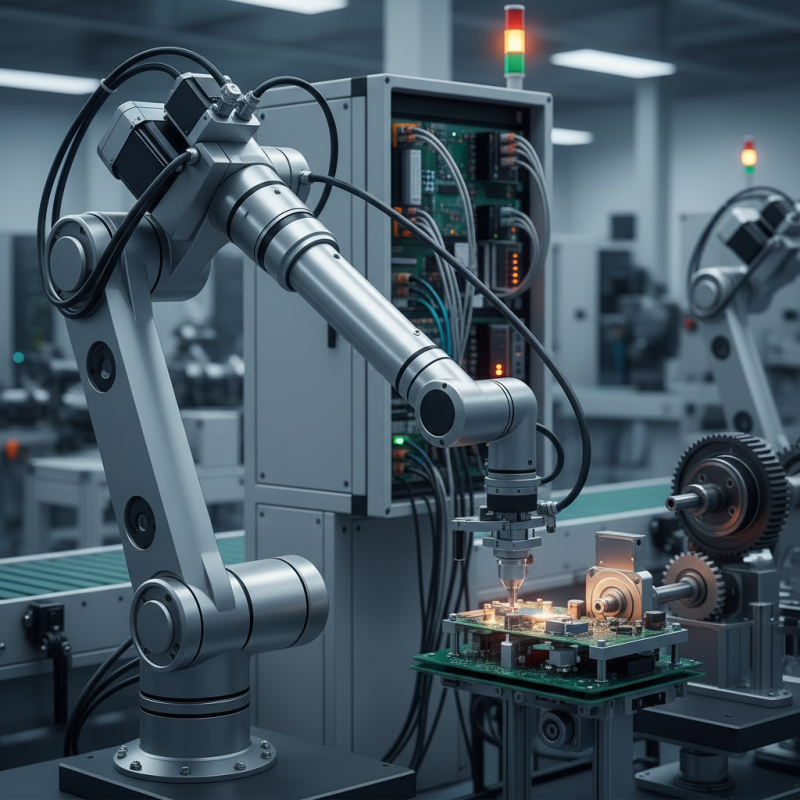
At the core of motion systems are components like motors, actuators, and controllers. Each part works together to achieve precise movements. For instance, a robotic arm uses motion systems to perform complex assembly tasks. This technology enhances productivity and reduces errors.
Understanding motion systems is essential for engineers and businesses alike. The design and implementation of these systems require specialized knowledge. Mistakes in this area can lead to costly inefficiencies. Proper training and expertise can help improve the effectiveness of motion systems in real-world applications.
Definition and Overview of Motion Systems
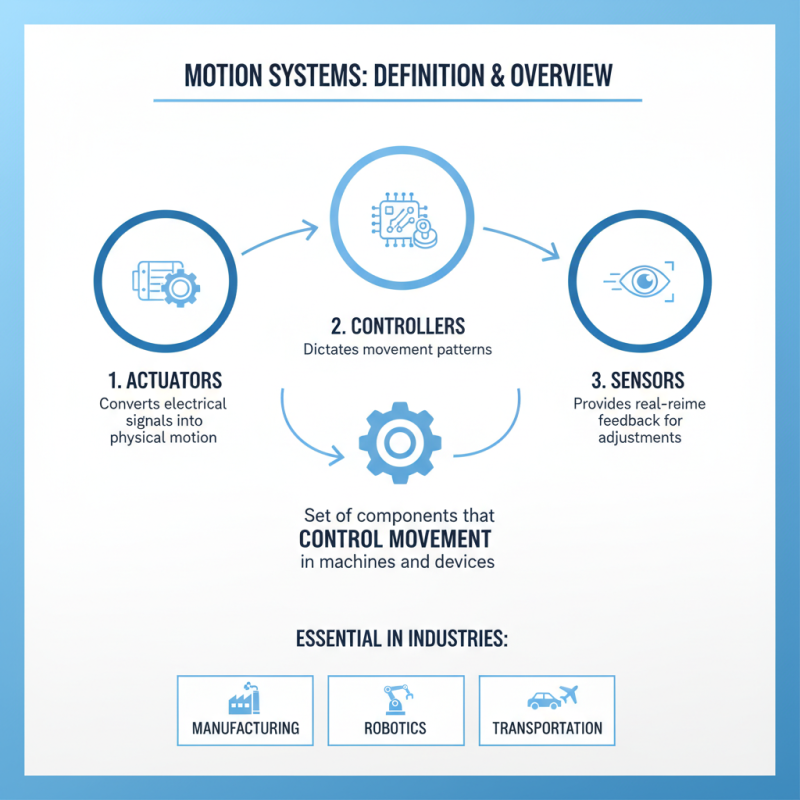
Motion systems refer to the set of components that control movement in machines and devices. They are essential in numerous industries, including manufacturing, robotics, and transportation. A motion system typically comprises actuators, controllers, and sensors working in harmony. Actuators convert electrical signals into physical motion, while controllers dictate the movement patterns. Sensors provide feedback, enabling the system to adjust in real time.
Understanding motion systems requires focusing on their key functionalities. They often utilize linear or rotary motion principles to facilitate tasks. Linear systems move in a straight path, while rotary systems revolve around a central axis. This distinction is crucial, as it impacts the design and application of a motion system. Real-world challenges can arise, such as achieving precision under variable loads, which requires continuous calibration and testing.
In practice, designing an effective motion system involves careful consideration. Engineers must consider factors like torque, speed, and efficiency. There might be moments of uncertainty during development, such as when selecting the right components. Evaluating options and their trade-offs can be complex. Balancing cost and performance is a constant challenge that often leads to valuable insights and improvements in motion technology.
Key Components of Motion Systems and Their Functions
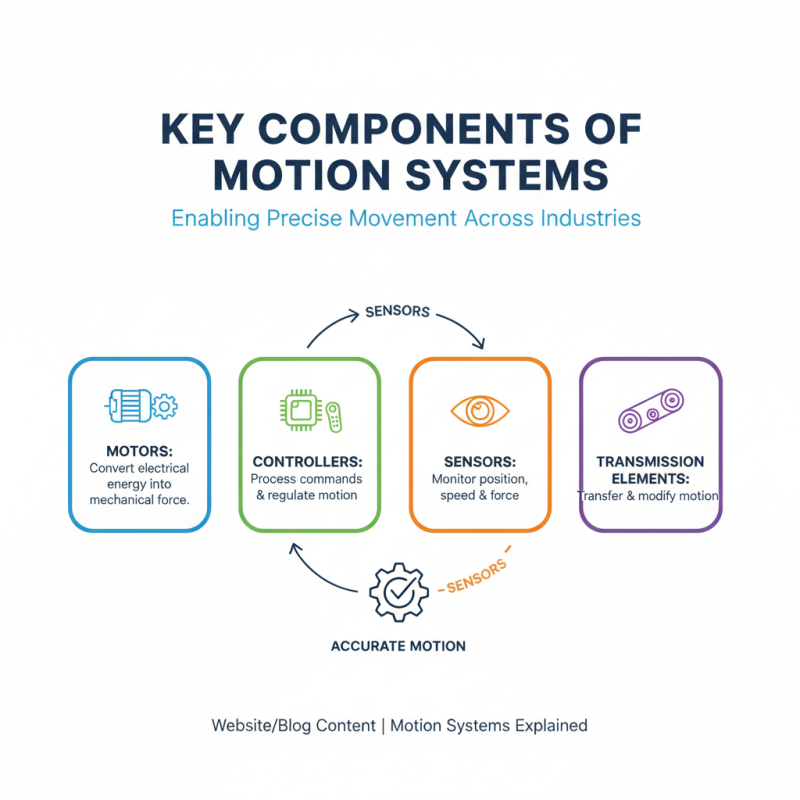
Motion systems are essential in various industries, enabling precise control of movement. The key components of these systems include motors, controllers, sensors, and transmission elements. Each plays a vital role in achieving accurate motion.
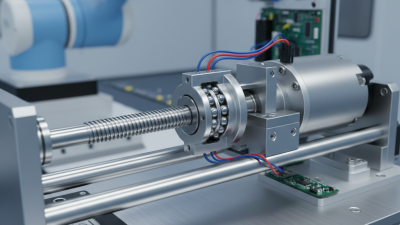
Motors serve as the driving force behind motion systems. They convert electrical energy into mechanical energy. Controllers manage motor functions, sending signals based on input from sensors. Sensors provide real-time feedback, ensuring movement aligns with desired parameters. Transmission elements, like gears and belts, facilitate the transfer of power from the motor to the load, impacting speed and torque.
Understanding these components is critical. Each element needs careful selection and integration. The interaction can be complex and might require adjustments. Potential issues can arise during operation, affecting performance. Regular testing and calibration are essential for optimal function. Motion systems must adapt to changing conditions and loads for continued reliability.
Types of Motion Systems and Their Applications
Motion systems are crucial in various industries, providing precise control over movement. There are several types of motion systems, each with unique applications. These include linear motion systems, rotary motion systems, and motion control systems.
Linear motion systems involve components that move in straight lines. These systems are widely used in manufacturing processes, robotics, and automation. They ensure accuracy and repeatability in tasks like assembly and packaging.
Rotary motion systems provide circular movement and are common in motors and gears. They are often used in conveyor belts and CNC machines.
Here’s a tip: When selecting a motion system, consider the application requirements and environment. It's important to evaluate the expected load and speed limits.
Motion control systems integrate various components, allowing for complex movements. They often utilize sensors and software to enhance performance. Proper calibration and regular maintenance are crucial for optimal operation.
Another tip: Always test the system under load before full deployment. This can reveal potential issues that need addressing. Ensuring reliability in motion systems can significantly reduce downtime in production.
Principles of Operation in Motion Systems
Motion systems operate based on fundamental principles that drive their effectiveness. At the core, these systems leverage mechanics and control theories. They convert different forms of energy into movement. Commonly, this involves the conversion of electrical energy into mechanical motion. Various sensors and actuators work together to achieve desired results.
One critical aspect of motion systems is feedback control. This process involves continuously monitoring the system's output and adjusting inputs for precision. Sensors detect position, speed, and other factors. Actuators respond by altering dynamics, ensuring accuracy. However, the challenge lies in minimizing errors in this feedback loop. Even a small discrepancy can disrupt performance.
Another essential principle is the use of drives in motion systems. Drives control speed and torque, influencing overall efficiency. Different applications may require different settings, making flexibility vital. Users often need to experiment to find optimal configurations. This trial-and-error approach is necessary for refining system performance. Yet, it can lead to frustrations as users navigate complexities. Understanding these principles is crucial for achieving effective motion solutions.
What is a Motion Systems and How Do They Work? - Principles of Operation in Motion Systems
| Component |
Function |
Type |
Application |
| Actuator |
Converts energy into motion |
Electric/Pneumatic/Hydraulic |
Robotics, Automation |
| Sensor |
Detects physical properties |
Optical, Proximity, Pressure |
Monitoring systems, Feedback |
| Controller |
Processes inputs and outputs |
PLC, Microcontroller |
Industrial Machines, CNC |
| Drive System |
Transmits power to the actuator |
Stepper Motor, Servo Motor |
Conveyor systems, Gimbals |
| Feedback Loop |
Ensures accuracy of motion |
Closed-loop, Open-loop |
Robotic arms, Drones |
Future Trends in Motion System Technology
As the demand for precision and efficiency grows, motion system technology is rapidly evolving. Future trends indicate significant advancements in automation, artificial intelligence, and energy efficiency. These innovations are set to redefine industries. Robotics, for instance, will become more integrated with machine learning algorithms. This allows systems to learn and adapt in real-time, leading to improved performance.
Tip: Consider keeping an eye on industry reports. They often highlight key developments in motion system technologies.
Another emerging trend is the shift towards sustainable practices. Motion systems are being designed to reduce energy consumption and waste. This not only benefits the environment but also lowers operational costs for companies. Such systems might include regenerative braking and advanced materials that enhance lightweight designs.
Tip: Investing in training for your team on new technologies can enhance adaptation. Ensuring everyone is on the same page makes transitions smoother.
Integrating smart sensors will also change how these systems function. The sensors can provide vital data to optimize processes. Yet, the complexity of these systems could pose challenges. Organizations must be diligent in managing and interpreting data to avoid pitfalls. This requires a level of expertise that continuously evolves with the technology.
Motion Systems Technology Advancements