Choosing the right motion systems in 2026 will require more than comparing speed, torque, and purchase price. Engineers must connect machine goals with energy use, safety, maintenance, data access, and future expansion. A servo axis may deliver impressive acceleration, yet a simpler stepper system could provide better value for a low-duty indexing task. The correct decision depends on the application.
Industry data shows why this decision matters. The International Federation of Robotics reported 541,302 industrial robots were installed worldwide in 2023, with more than 4.28 million robots operating globally. Each robot depends on coordinated motors, drives, controllers, feedback devices, and mechanical transmission. This wider installed base increases demand for reliable motion architectures and qualified technical support. The International Energy Agency also identifies industrial motor systems as a major electricity consumer, making efficiency a practical operating concern, not only a sustainability target. Small losses become expensive across thousands of daily cycles.
A sound selection process should examine duty cycle, load inertia, positioning accuracy, peak force, thermal conditions, network compatibility, and service access. Safety functions should align with relevant standards, including IEC 61800-5-2 and ISO 13849 where applicable. Real projects are less tidy. Cable routing changes, dust enters, operators need faster setup, and suppliers sometimes overstate performance. This approach is not perfect. Engineers should validate calculations with testing, measured energy data, and failure records before approving a final design. In 2026, the best motion systems will balance precision with resilience, measurable efficiency, and the people who must maintain them.
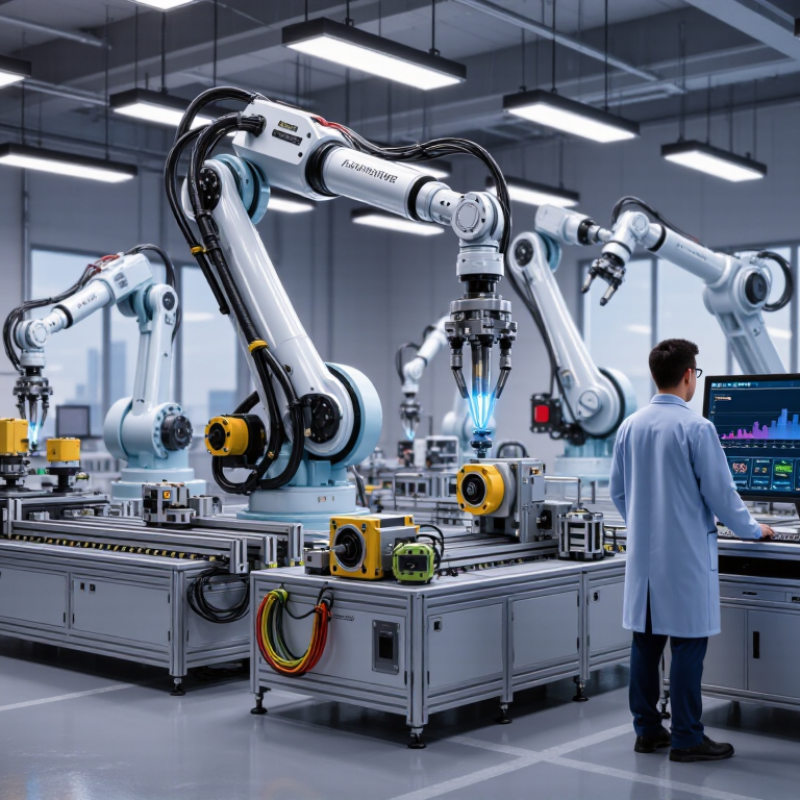
Motion systems convert electrical commands into controlled movement. Their fundamentals include motors, drives, transmissions, guides, feedback devices, and structural frames. Linear systems move along an axis, while rotary systems provide controlled turning. Some machines need both.
Start with the load and motion profile. Measure mass, acceleration, travel distance, cycle time, and stopping requirements. A 25-kilogram carriage moving 800 millimeters needs different components from a small inspection head. Calculate force, torque, inertia, and heat. Check repeatability separately from accuracy. They are not identical. A system may return consistently to the wrong position.
In machine design reviews, I also examine duty cycle and the working environment. Dust, vibration, washdown, temperature, and limited space can quickly change the selection. Choose feedback based on risk and precision, not habit. Review encoder resolution, backlash, stiffness, cable routing, and emergency stopping behavior. Confirm every claim with test data and current technical documentation. Relevant safety requirements should guide the design.
A spreadsheet can still mislead. Real friction is often higher than predicted. I have seen a promising actuator lose precision after hours of continuous cycling because heat was ignored. Prototype the worst case, record measured performance, and leave service access around moving parts. Maintenance time matters too. A slightly less powerful system may prove more reliable, quieter, and easier to adjust.
Load assessment starts with more than rated payload. Include tooling, cables, fixtures, acceleration forces, and unexpected jams. A 40-kilogram load moving at 2 meters per second creates far greater demands than its static weight suggests.
In practical machine reviews, engineers should check continuous duty, peak duty, and thermal limits separately. A spreadsheet can still lie.
541,302
The International Federation of Robotics reported 541,302 industrial robot installations in 2023, a 2% annual increase.
This growth raises expectations for reliable, repeatable motion.
Speed must be matched with accuracy. High velocity is useless when settling time damages cycle performance.
Check positioning accuracy, repeatability, backlash, vibration, and encoder resolution under real loads.
ISO 9283 provides recognized methods for evaluating robot performance, but laboratory results may not reflect production floors. That gap deserves attention.
The U.S. Department of Energy estimates that motor-driven systems consume about 70% of industrial electricity in the United States. Efficient sizing therefore matters beyond purchase cost.
Operating conditions can quietly shorten service life. Dust, coolant mist, humidity, temperature changes, and poor cable routing all influence performance.
Specify sealing, lubrication intervals, braking behavior, and maintenance access before selecting components.
For a packaging line, frequent starts and stops may matter more than maximum speed.
For machining, stiffness and contamination resistance may matter more.
Test the system with representative payloads, not empty fixtures. Then question the test.
Comparing linear, rotary, and hybrid motion technologies starts with the machine’s actual movement. Linear systems move along a straight path, making them suitable for inspection slides, pick-and-place stages, and controlled dispensing. They offer predictable positioning and simple travel calculations. However, long strokes can increase frame size, vibration, and energy use. A smooth test run does not always predict factory performance.
Rotary systems suit continuous turning, indexing, winding, and angular positioning. They can deliver compact movement with high cycle rates. Engineers should examine torque, inertia, backlash, and stopping accuracy before selecting one. A rotary actuator may appear efficient, yet poor load matching can create heat and unstable motion. Small errors become visible at high speed.
Hybrid systems combine linear and rotary axes for tasks such as robotic assembly, camera alignment, and automated packaging. They provide greater flexibility, but flexibility has a cost. More axes require stronger controls, careful cable routing, and more detailed maintenance planning. In field commissioning, acceleration profiles often need adjustment after real loads are installed. That step is easy to underestimate. Environmental factors also matter. Dust, temperature changes, washdown routines, and operator access can change the best choice. A practical comparison should include total energy demand, service intervals, safety limits, payload variation, and future upgrades. The technically ideal system may still fail if technicians cannot diagnose it quickly.
How to Choose the Right Motion Systems in 2026?
Matching motors, drives, controls, and feedback components starts with the machine’s actual movement. Do not begin with catalog speed. Define payload, stroke, acceleration, duty cycle, and stopping distance. A 25-kilogram carriage may need modest speed but high peak torque during acceleration. Calculate reflected inertia before selecting the motor. Then compare the torque-speed curve with thermal limits. I have seen compact motors fail because continuous torque was confused with short-term peak torque. That mistake is expensive.
The drive must match motor current, voltage, feedback type, and regeneration needs. Check whether the control loop supports the required update rate and trajectory profile. For fast indexing, position error matters more than impressive top speed. Choose feedback for the environment and required resolution. An encoder can reveal following error, while a resolver may tolerate harsher temperatures. Keep cable length, shielding, grounding, and cabinet heat in the design. Small wiring details can create visible jitter.
Controls should communicate clearly with the drive and machine controller. Confirm command formats, fault reporting, homing behavior, and recovery after power interruption. Test the complete chain under real loads, including cold starts and repeated stops. Bench tests are useful, but they can hide belt stretch, backlash, and vibration. This method is not flawless. I still revisit assumptions after commissioning, especially when the payload changes. Document measured current, settling time, and temperature. Leave room for maintenance access. A system that performs well but cannot be serviced is only half-designed.
Matching motors, drives, controls, and feedback components by application requirements
Representative engineering selection targets based on common industrial motion-system ranges. Actual values depend on load inertia, acceleration, duty cycle, mechanics, thermal limits, and required accuracy.
Performance should be measured at the machine, not only in a supplier’s specification sheet. Record cycle time, positioning error, vibration, temperature, and load changes during real production. The International Federation of Robotics reported 541,302 industrial robot installations in 2023, showing how quickly automated motion is expanding. However, faster movement can increase heat, wear, and stopping distance. A short demonstration is not enough.
Safety validation must include unexpected conditions. Test emergency stops, power loss, overloads, guarding, and restart behavior. ISO 13849-1 and IEC 61800-5-2 provide useful frameworks for functional safety. Measure the actual stopping distance with the heaviest load. It may surprise you. Risk assessments should involve operators and maintenance engineers, because they understand access points that drawings often miss.
Maintenance and total cost require honest modelling. The U.S. Department of Energy reports that motor-driven equipment can represent more than 70% of industrial electricity use. Therefore, efficiency, standby consumption, and regeneration deserve attention. McKinsey research suggests predictive maintenance can reduce downtime and maintenance costs substantially, but sensors alone will not deliver those results. Review lubricant intervals, spare-part availability, diagnostic quality, training, and software costs over ten years. My own evaluation habit is imperfect: I sometimes overvalue initial precision and undervalue service access. That mistake is expensive.