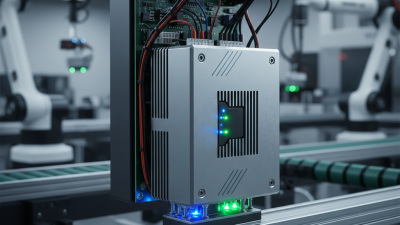
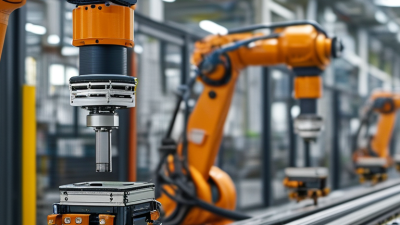
Why Choose ETEL Motion Control Systems?

Why Choose ETEL Motion Control Systems?

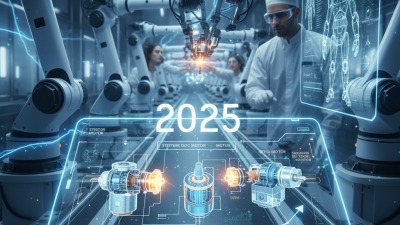
Choosing a motion platform is rarely a simple comparison of speed, travel, and price. The real decision begins with repeatability, thermal stability, integration effort, and long-term support. ETEL motion systems are designed for demanding applications where a tiny positioning error can affect an entire production result. Semiconductor inspection, medical equipment, optics, and precision automation all require this discipline.

Laurent Vaucher, an experienced precision-motion specialist associated with ETEL, explains, “Precision is not a single specification; it is the result of the whole system.” That idea matters. A motor alone cannot guarantee accurate movement. The controller, feedback device, mechanics, cabling, software, and installation environment must work together. ETEL combines direct-drive motors, high-resolution feedback, and advanced motion controllers within a coordinated platform. This can reduce backlash, simplify machine design, and improve dynamic response.

The practical value appears on the factory floor. A stable stage can follow a programmed path without visible hesitation. A responsive controller can correct small disturbances before they become rejected parts. Engineers also gain access to configurable solutions instead of forcing one standard product into every machine. That flexibility is useful, though it may increase the need for careful commissioning.

No system removes every engineering challenge. Thermal behavior, tuning quality, contamination, and mechanical stiffness still matter. Buyers should test real workloads, not rely only on catalog figures. Even so, ETEL motion control systems offer a strong foundation for precise, repeatable, and scalable equipment. Their value becomes clearest when accuracy must remain dependable after thousands of operating cycles.
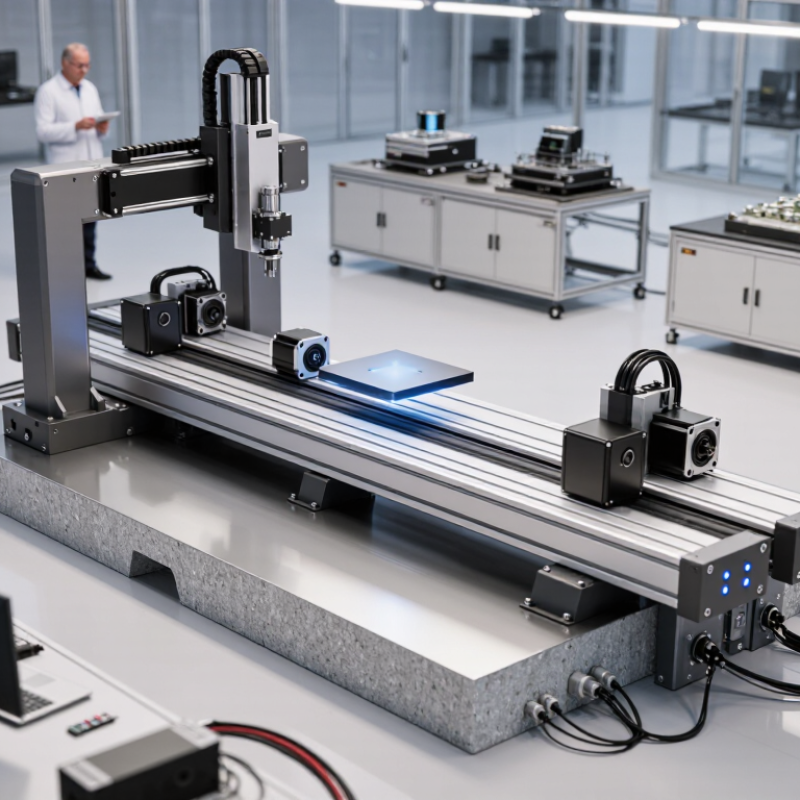
Why Choose ETEL Motion Control Systems?

ETEL Motion Control Systems: Definition and Core Components

Motion Control Systems: Definition and Core Components

A motion control system coordinates position, speed, torque, and timing. It turns digital commands into precise mechanical movement. Core components include a controller, servo drive, motor, feedback sensor, and mechanical stage. Industrial networks connect these parts with low communication delays. In real installations, cable quality and grounding often matter more than expected. A small signal error can become visible machine vibration.

The International Federation of Robotics reported 541,302 industrial robots were installed worldwide in 2023. This growth increases demand for accurate, responsive motion platforms. A controller plans the motion profile. The drive regulates current and motor torque. The motor creates movement. Encoders measure actual position and speed. The controller then corrects the difference between command and performance. This closed-loop process supports repeatability in inspection, electronics, medical equipment, and automated assembly. However, higher resolution does not always mean better results. Poorly tuned control loops may amplify noise and reduce stability.

Tips: Define the load, travel distance, speed, and accuracy before selecting components. Test thermal drift during long operating cycles. Leave room for calibration. Engineers sometimes overlook it. Review cable routing, resonance, and maintenance access during early design. A practical trial with real payloads can reveal weaknesses that simulations miss. Data from the International Organization for Standardization also reinforces the value of documented risk assessment and controlled operating procedures in automated systems.

How ETEL Motion Control Systems Operate

A precision motion control system converts digital commands into measured mechanical movement. A controller sends current to a linear motor or rotary motor. The motor then moves a platform along a guided axis. Position feedback comes from a high-resolution encoder. This creates a closed-loop process. The system constantly compares the target position with the actual position.

During operation, the controller corrects small errors within milliseconds. It adjusts acceleration, velocity, and motor force. A glass substrate, inspection camera, or machining tool can move smoothly without visible vibration. Mechanical stiffness supports accuracy, while carefully tuned control software manages settling time. Temperature sensors also help detect thermal drift. Even a small temperature change can affect micron-level positioning.

Calibration remains essential. Technicians verify travel, repeatability, straightness, and response under real loads. They record measurements and compare them with defined tolerances. Clean cable routing matters too. Poor routing can introduce drag or electrical noise. In practical installations, performance may decline when payloads change or mounting surfaces are uneven. This is where engineering judgment becomes important. A perfect model is rarely enough. Engineers often retune the control loop after observing vibration, overshoot, or delayed settling. Reliable systems therefore combine precise mechanics, verified feedback, disciplined commissioning, and ongoing maintenance.

Key Performance Advantages of ETEL Systems

High-performance motion control begins with predictable positioning. Advanced linear systems can deliver nanometer-level resolution, stable velocity, and rapid settling between movements. These advantages matter when a machine handles fragile wafers, optical components, or precision inspection tools. A shorter settling time can increase throughput without sacrificing measurement quality. That difference appears on the production floor.

Speed is only part of the equation. Direct-drive motors reduce mechanical transmission losses and remove backlash from gears or belts. This creates cleaner motion and fewer wear points. High-resolution feedback continuously compares commanded and actual positions. The controller can then correct small errors before they affect the process. Thermal behavior also deserves attention. Careful structural design helps limit drift during long operating cycles, although temperature changes can still challenge any platform. No system is perfect.

Reliable performance depends on integration. Engineers must match the stage, feedback device, amplifier, and control software as one motion architecture. Poor cable routing or unsuitable tuning can weaken excellent hardware. In practical commissioning, clear diagnostics save valuable time. Operators can identify vibration, friction, or alignment problems before they become recurring faults. Some applications need extreme acceleration; others need quiet, smooth travel. Treating every project the same is a mistake. The strongest solution balances accuracy, speed, stiffness, serviceability, and real operating conditions. That balance often requires testing, adjustment, and a willingness to question the first design choice.

Applications Across Precision Motion Industries

Precision motion systems serve demanding environments where a small error can ruin an entire production cycle. In semiconductor inspection, stages must move smoothly across narrow paths while maintaining repeatable positioning. SEMI’s World Fab Forecast projected global semiconductor manufacturing equipment spending near 110 billion dollars in 2025. That investment increases pressure on motion platforms to deliver stable performance, clean operation, and measurable uptime.

Medical imaging and laboratory automation create different demands. Motion systems must support quiet movement, controlled acceleration, and repeatable sample handling. In aerospace production, larger travel ranges and vibration control become more important. The International Federation of Robotics reported 541,302 industrial robots installed worldwide in 2023. Precision axes often guide these robots, inspection tools, and assembly stations. The figures show scale. They do not guarantee quality.

Real production floors are less predictable than engineering drawings. Temperature changes, cable drag, lubrication choices, and imperfect alignment can alter results. That matters. A strong motion solution combines encoder feedback, tuned servo control, rigid mechanics, and practical service access. Engineers should test the complete machine, not only the stage. This is where many projects become complicated. A specification may promise nanometer resolution, yet the surrounding structure may not support it. Careful validation remains essential across photonics, electronics, medical devices, and advanced manufacturing.

Factors for Selecting an ETEL Motion Control System

Why Choose ETEL Motion Control Systems?

Selecting a motion control system should begin with the application, not a catalogue headline. Define payload, travel distance, acceleration, duty cycle, and required repeatability. A 20-kilogram stage moving two metres needs different mechanics from a precision inspection axis moving 50 millimetres. It sounds obvious. Many projects miss it.

The International Federation of Robotics reported 541,302 industrial robot installations worldwide in 2023. This growing automation base increases demand for stable motion, predictable maintenance, and fast commissioning. When comparing systems, examine position accuracy, settling time, thermal drift, encoder resolution, and structural stiffness. A useful design also matches the controller with the motor, amplifier, bearings, and software. One weak interface can reduce the value of excellent components.

541,302
industrial robot installations worldwide in 2023.

Environment matters as much as performance. Check temperature, dust, vibration, cable routing, and available cabinet space before approval. Engineers should request measured data, not only typical values. Ask how accuracy changes after hours of operation. Ask how faults are diagnosed on a factory floor. The U.S. Department of Energy identifies motor-driven systems as major industrial electricity users, so efficiency and regenerative performance deserve attention. However, energy figures can depend heavily on motion profiles. That limitation should be stated clearly. A spreadsheet may look perfect. The machine may still disagree. Select the system that offers verified performance, practical integration, and enough engineering support for real production conditions.