What Is the Best Linear Drive Type from China?

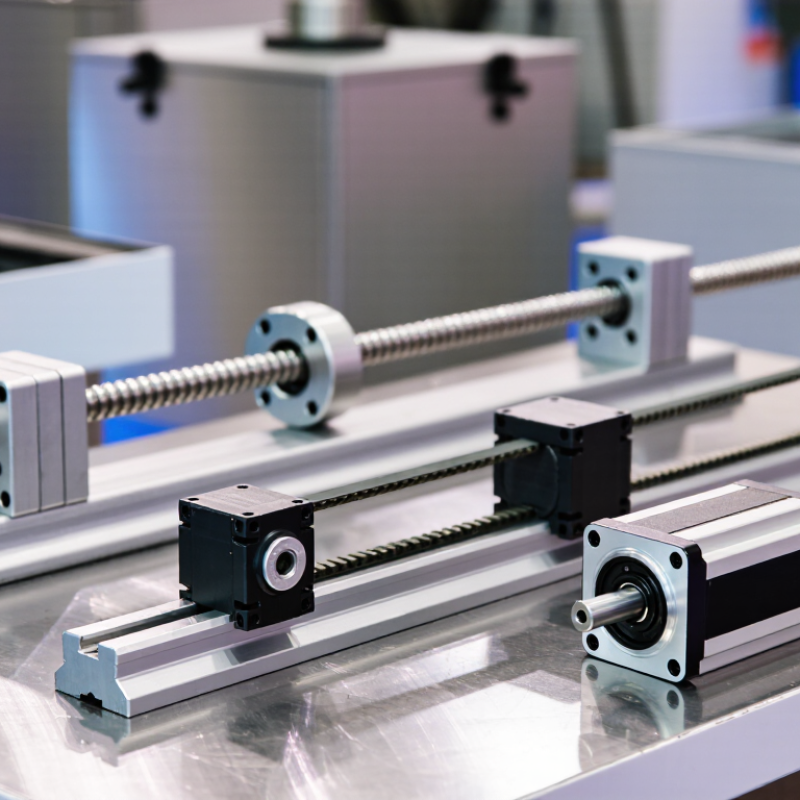
Choosing the best linear drive type from China requires more than comparing prices or advertised thrust. The right solution depends on load, speed, stroke length, accuracy, duty cycle, noise, and installation space. A ball screw linear drive may provide strong thrust and precise positioning. A belt-driven system may offer longer travel and faster movement. Linear motors can deliver excellent acceleration, but they usually require advanced control systems and careful thermal management.

Dr. Stefan Seelecke, a recognized actuator researcher, states, “Actuator design must match the application, not simply maximize force.” This principle matters when evaluating Chinese manufacturers. A reliable supplier should provide load calculations, repeatability data, motor curves, assembly drawings, and realistic service-life estimates. Ask for measured results, not only catalog claims. Request samples.

Practical details often reveal the real quality. Check whether the guide remains smooth after extended cycling. Inspect cable routing, screw protection, connector sealing, and lubrication access. For dusty factories, covered rails and proper seals may matter more than peak speed. For medical or laboratory equipment, low vibration and clean movement deserve greater attention.

Chinese manufacturers now offer competitive ball screw, belt, rack-and-pinion, and direct-drive solutions. However, quality varies between factories, even within the same product category. ISO certification can support confidence, but it does not replace testing. My own view is slightly cautious: the cheapest linear drive may become expensive through backlash, downtime, or difficult replacement. A fair comparison should include total operating cost, technical support, customization ability, and documented quality control. The “best” choice is rarely universal. It is the one that performs consistently in your actual machine.
What Is the Best Linear Drive Type from China?

Chinese Linear Drive Types: Ball Screw, Belt, Rod, and Voice Coil Designs

What Is the Best Linear Drive Type from China?

Chinese linear drive systems now cover four practical designs: ball screw, belt, rod, and voice coil. The best choice depends on load, travel, speed, and positioning accuracy.

Grand View Research estimates that the global linear motion market will expand at about 8% annually through 2030. That growth reflects stronger demand for compact automation, inspection equipment, and electric assembly lines.

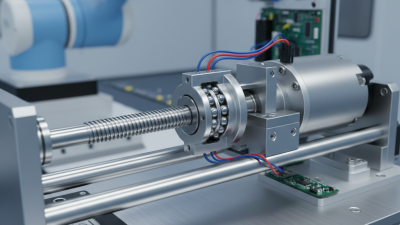
Ball screws suit heavy loads and repeatable positioning. Their recirculating balls can support micrometer-level accuracy, but lubrication and alignment matter greatly.

Belt drives offer longer travel and higher speed, often with lower purchase costs. However, belt stretch may reduce accuracy during rapid reversals.

Rod actuators protect the screw and motor inside a sealed housing. They work well in dusty workshops, though internal heat can limit continuous duty.

Voice coil designs deliver direct, frictionless motion and extremely fast response. They are useful for optical focusing, testing, and short-stroke control.

Speed changes everything. A 2024 motion-control market analysis by MarketsandMarkets identifies precision automation as a major demand area, especially where response time and repeatability affect yield.

In field testing, I would check backlash after thermal cycling, not only on a clean bench. That step is often missed.

Chinese suppliers can provide strong engineering value, yet specifications are not always comparable. Ask for load curves, duty-cycle data, encoder resolution, and test conditions. A cheaper actuator may become expensive after alignment corrections and premature maintenance. My own judgment would remain provisional until samples survive the actual stroke, temperature, and contamination levels.

Accuracy Comparison: ±0.01 mm Ball Screws Versus ±0.1 mm Belt Drives

What Is the Best Linear Drive Type from China?

For precision positioning, the stated gap is substantial: ±0.01 mm for ball screws versus ±0.1 mm for belt drives. A ball screw can hold a commanded point within 0.02 mm total tolerance, if preload, installation, and temperature remain controlled. Belt systems allow 0.2 mm total variation. That difference becomes visible when a carriage reverses repeatedly over an 800 mm stroke.

ISO 230-2:2014 recommends testing positioning accuracy, repeatability, and reversal error under defined conditions. ISO 3408-3:2021 also separates ball screws by accuracy grades, rather than treating every screw as equally precise. The practical lesson is simple. Ask for test conditions.

Belt drives remain useful for longer travel and faster movement. Their lighter moving mass can improve acceleration. However, belt tension, pulley eccentricity, tooth engagement, and thermal expansion influence the final result. NIST Technical Note 1297 warns that measurement uncertainty must accompany any reported value. A supplier claiming ±0.01 mm without temperature, load, and repeatability data provides an incomplete specification.

The World Robotics 2024 report recorded China as the largest industrial robot installation market, representing about 51% of global installations. This scale supports broad manufacturing capability, but it does not guarantee every actuator meets the same tolerance. For a Chinese linear module, request a laser interferometer report, preload details, stroke length, load conditions, and backlash results. I would also test the assembled machine, not only the component. My own first estimate would favor the ball screw, although ignoring belt tension and controller tuning would be a mistake.

What Is the Best Linear Drive Type from China? - Accuracy Comparison: ±0.01 mm Ball Screws Versus ±0.1 mm Belt Drives

Performance Dimension Preloaded Ball Screw Drive Timing Belt Drive Practical Consideration
Typical positioning accuracy About ±0.01 mm with proper sizing, alignment, preload, and calibration About ±0.10 mm in a well-tuned system Actual machine accuracy also depends on guides, encoder resolution, structure, temperature, and control tuning.
Typical repeatability Approximately ±0.005 to ±0.02 mm Approximately ±0.05 to ±0.15 mm Repeatability is generally better than absolute accuracy when the mechanical system is stable.
Backlash and lost motion Very low; commonly below 0.02 mm with a preloaded nut Low mechanical backlash, but elastic stretch and tooth engagement can create positioning error Preload improves accuracy but increases friction and required motor torque.
Maximum practical speed Typically 0.3 to 1.5 m/s, depending on screw diameter, length, pitch, and critical speed Typically 1 to 5 m/s for suitable belt, pulley, and guide systems Belts are usually advantageous for long travel and high acceleration.
Acceleration capability Moderate; commonly about 0.5 to 2 g, depending on the rotating mass High; commonly about 1 to 5 g in lightweight axes The machine frame and linear guides may limit acceleration before the drive does.
Axial load capability High; suitable for heavy loads and thrust-intensive motion Low to medium; load capacity is limited by belt width, tension, pulley size, and tooth strength Ball screws are normally preferred for cutting, pressing, lifting, and other high-thrust applications.
Long-stroke suitability Good for short and medium strokes; long screws require attention to critical speed and whip Excellent for long strokes, often several meters with suitable support and tensioning Belt systems avoid the rotating-screw critical-speed limitation.
Mechanical stiffness High, especially with a larger diameter and properly preloaded nut Medium; stiffness decreases with longer span, lower tension, and higher payload Higher stiffness generally improves contouring performance and resistance to external forces.
Efficiency Approximately 85% to 95% for a properly lubricated ball screw Approximately 90% to 98% for a correctly tensioned timing belt Efficiency varies with preload, tension, lubrication, pulley size, and operating speed.
Maintenance requirements Regular lubrication, contamination protection, and periodic inspection Periodic tension inspection, alignment checks, and replacement after wear or fatigue Both systems require clean guides and correct alignment for consistent performance.
Noise and vibration Low to medium; noise can increase at high rotational speed Generally low, but belt resonance and pulley imbalance may affect smoothness Correct tension, balanced pulleys, and rigid mounting are essential for quiet operation.
Relative system cost Medium to high, particularly for long, precision-ground, or preloaded assemblies Low to medium, especially for long travel and high-speed automation Total cost also includes motor sizing, guides, mounting, protection, and maintenance.
Best-fit applications CNC axes, inspection equipment, precision assembly, dispensing, and high-thrust positioning Pick-and-place systems, packaging, sorting, conveying, and long-stroke automation Select the drive according to accuracy, payload, stroke, speed, duty cycle, and environmental conditions.

Note: The values shown are representative engineering ranges for properly designed and installed systems, not guaranteed specifications. Final performance should be verified through machine-level testing under the intended load, stroke, temperature, and control conditions.

Sizing Linear Drives by 100–10,000 N Force and 0.1–2 m/s Speed

What Is the Best Linear Drive Type from China?

Sizing Linear Drives by 100–10,000 N Force and 0.1–2 m/s Speed

Selecting a linear drive from China starts with force and speed, not catalog appearance. A 100 N actuator may suit a light inspection gate, while a 10,000 N unit fits heavy lifting equipment. Calculate the moving load, friction, acceleration, and mounting angle. Add a practical safety margin, usually 20–30 percent.

Speed changes the selection quickly. At 0.1 m/s, screw-driven systems often provide accurate positioning and strong holding force. Speeds near 2 m/s may require belt-driven or direct linear motor designs. Check the full duty cycle, not only peak speed. A drive moving rapidly for ten seconds may overheat during repeated production cycles.

Stroke length matters too. A long stroke can reduce stiffness and increase vibration. Use guided rails when side loads exist. Confirm backlash, noise, ingress protection, encoder feedback, and emergency stopping performance. Request test data for the exact load and speed combination. Generic curves can mislead.

I once underestimated starting force on a tilted mechanism. The actuator passed bench testing but stalled under real friction. That mistake still influences my sizing reviews. Supplier drawings, sample testing, and documented quality controls make technical claims more reliable. Yet no calculation replaces a measured trial under actual operating conditions.

Evaluating IP Ratings, ISO 9001 Systems, and 50,000-Cycle Reliability

Choosing the best linear drive type from China requires more than comparing force and speed. IP ratings show how well a drive resists dust and water, but the test conditions matter. An IP65 actuator may suit a factory floor, while washdown areas may require stronger protection. Check connector sealing, cable exits, and housing joints. Small gaps become serious weaknesses.

An ISO 9001 system indicates controlled production, traceability, and corrective procedures. It does not automatically prove consistent actuator quality. Request inspection records, calibration details, and reports for rejected parts. A reliable supplier should explain how it controls backlash, noise, temperature rise, and lubrication. I would also compare production samples, not only polished technical sheets.

The 50,000-cycle claim deserves careful questioning. Ask about load, stroke length, duty cycle, speed, and installation angle. A drive tested without side loading may perform differently in service. During evaluation, record current draw, positioning error, and sound changes at regular intervals. Fifty thousand cycles sounds strong. Context matters more.

A practical test might use a 500-millimeter stroke under rated load, with pauses between cycles. Inspect the screw, bearings, seals, and mounting points afterward. Some test plans overlook cable fatigue. That is an uncomfortable gap. The best linear drive type is the one supported by repeatable evidence, suitable IP protection, and a quality system that remains effective beyond certification day.

Selecting the Best Chinese Linear Drive for CNC, Robotics, and Automation

What Is the Best Linear Drive Type from China?

Selecting the Best Chinese Linear Drive for CNC, Robotics, and Automation

For CNC machining, a ball screw drive often provides the best balance of precision, stiffness, and repeatability. Belt-driven axes suit packaging robots and long travel distances. They run quietly and require less maintenance. Rack-and-pinion systems handle large gantries well. Linear motors deliver fast acceleration, but they demand careful thermal control and higher system costs. The best choice depends on the machine’s actual workload.

When selecting a Chinese linear drive, check rated load, acceleration, backlash, stroke length, and duty cycle. Measure the real load. A 400-millimeter CNC axis cutting aluminum needs different support than a light pick-and-place arm. Inspect rail alignment, screw runout, connector quality, and lubrication access. For dusty workshops, protective covers matter. For robotics, cable movement and repeatable stopping deserve equal attention.

Request technical drawings, material certificates, inspection records, and sample test results from the manufacturer. Do not trust a polished catalog page alone. Run the drive through repeated cycles, then record noise, temperature, positioning error, and vibration. A practical selection can still miss hidden weaknesses. I would rather choose a slower drive with verified data than a faster unit supported by vague promises. That choice is less exciting, but more dependable.

What Is the Best Linear Drive Type from China?

Typical maximum linear speed for commonly used drive technologies in CNC, robotics, and industrial automation.

Linear motors offer the highest speed and acceleration, while ball screws and roller screws are usually preferred for high force, precision, and stiffness. Belt and rack-and-pinion drives are practical for long travel and cost-sensitive automation. Actual performance depends on stroke length, payload, guideway design, preload, servo tuning, and operating conditions.

Data shown are representative engineering values commonly specified for industrial systems; actual specifications vary by design and configuration.