Why Choose a Side Tipper Truck for Bulk Hauling?
Choosing the right body design can change how quickly and safely bulk materials move across a demanding worksite. A Side Tipper Truck unloads through its side, reducing the space needed behind the vehicle. That matters on narrow roads, stockpiles, construction sites, and uneven loading areas.
Bulk-haulage specialist Paul O’Neill says, “The best tipper is not the largest one; it is the one matched to the route, material, and loading cycle.” This practical view deserves attention. A Side Tipper Truck can handle gravel, sand, soil, grain, and other approved bulk materials with efficient discharge. Its sideways tipping action may also shorten waiting times between loads. Every minute matters.
The advantages are not automatic. Operators must understand the trailer’s center of gravity, ground conditions, load distribution, and tipping clearance. A poorly selected unit can create delays, excessive tyre wear, or unstable unloading. That part is easy to overlook.
A durable chassis, responsive hydraulic system, and corrosion-resistant body can support long-term performance. However, maintenance quality still decides much of the result. Daily checks should include hydraulic lines, hinges, tyres, lights, and locking mechanisms. Small defects become expensive problems.
The strongest choice depends on the complete hauling cycle. Consider payload, travel distance, material density, road access, unloading frequency, and service support. A Side Tipper Truck is not perfect for every operation. Yet, when its design matches real site conditions, it can provide faster discharge, better space use, and more consistent productivity. The smart decision begins with honest measurements, not impressive specifications.
What Is a Side Tipper Truck?
What Is a Side Tipper Truck?
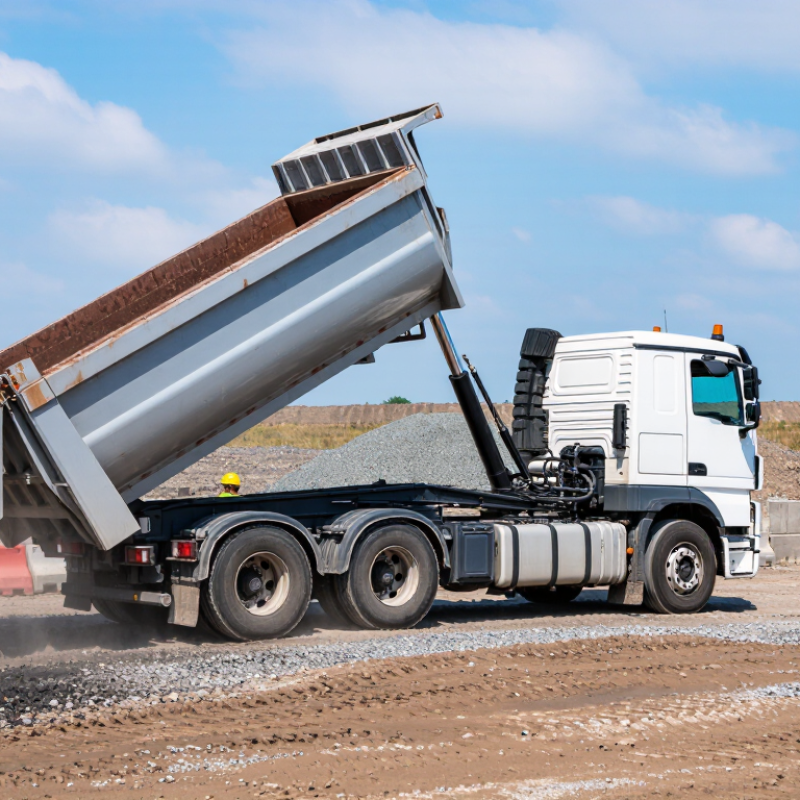
A side tipper truck is a heavy vehicle designed to unload bulk materials through a lateral tipping movement. Hydraulic cylinders raise one side of the body, allowing gravel, sand, soil, grain, or crushed stone to slide away. The truck does not need to lift its body fully upright. This feature helps when overhead clearance is limited.
Its practical value becomes clearer on busy construction and mining sites. A driver can unload beside a road edge, stockpile, or receiving hopper. The process also reduces reversing time in some layouts. The U.S. Department of Transportation’s Freight Facts and Figures 2023 reports that trucks carry more than 12 billion tons of freight annually in the United States. Efficient unloading matters at that scale. Every lost minute can affect fuel use, labor, and site productivity.
Side tippers are not perfect. Sticky clay may remain along the floor. Uneven ground can also create dangerous body movement during discharge. Operators should check payload distribution, hydraulic condition, ground stability, and nearby workers before tipping. The European Commission’s Statistical Pocketbook 2024 records more than 1.8 trillion tonne-kilometres of EU road freight in 2022. That figure shows the pressure on modern haulage systems, but it does not prove that one truck design fits every route. In practice, material type and site geometry should guide the choice.
Why Choose a Side Tipper Truck for Bulk Hauling? - What Is a Side Tipper Truck?
| Data Dimension | Typical Information | Why It Matters for Bulk Hauling |
| Definition | A side tipper truck is a rigid truck or tractor-trailer equipped with a hydraulic lifting system that discharges bulk material through one side of the body. | Side discharge can reduce the space required behind the vehicle during unloading. |
| Common Applications | Aggregate, sand, gravel, coal, grain, wood chips, demolition debris, agricultural materials, and other free-flowing bulk loads. | The body is suitable for repeated loading, transport, and rapid unloading cycles. |
| Typical Payload Capacity | Approximately 20–40 metric tonnes for many heavy-duty side tipper trailers; rigid truck capacities are commonly lower. | Actual payload is limited by the legal axle load, chassis rating, body weight, and material density. |
| Typical Body Volume | Approximately 25–60 cubic metres, depending on body length, sidewall height, and material requirements. | A larger volume is useful for low-density materials, while dense materials may reach the weight limit first. |
| Typical Body Length | Approximately 7–14 metres for common side tipper bodies and trailers. | The selected length should match road regulations, turning areas, loading equipment, and required payload. |
| Unloading Direction | Material is discharged laterally from the left or right side, depending on the vehicle design. | This is useful beside stockpiles, windrows, trenches, road shoulders, and restricted rear-access areas. |
| Typical Unloading Cycle | Often about 30–90 seconds for the tipping movement, excluding positioning, gate operation, and return to the travel position. | Shorter discharge cycles can increase the number of hauling trips completed in a work shift. |
| Required Ground Conditions | The vehicle should be positioned on firm, reasonably level ground with adequate clearance on the discharge side. | Uneven or unstable ground can increase the risk of body movement, load shift, or vehicle instability. |
| Loading Compatibility | Compatible with wheel loaders, excavators, conveyors, hoppers, and other bulk-material handling equipment. | Matching the loading method with the body opening helps reduce loading time and material spillage. |
| Main Efficiency Advantage | Fast side discharge with less need for the vehicle to reverse into a dumping position. | It can improve site flow and reduce reversing movements in busy or confined work areas. |
| Safety Considerations | Operators should check ground stability, overhead clearance, side clearance, hydraulic components, load distribution, and locking mechanisms. | Correct positioning and routine inspections help reduce rollover, collision, hydraulic, and spillage risks. |
| Best Fit Compared with a Rear Tipper | Side tippers are especially suitable where rear unloading space is limited or material must be placed in a continuous line. | The choice depends on the site layout, material type, legal limits, unloading method, and fleet requirements. |
Note: The figures shown are typical industry ranges for comparison purposes. Actual dimensions, payload, body volume, and unloading time vary according to vehicle configuration, local regulations, material density, and operating conditions.
How Does a Side Tipper Truck Operate?
A side tipper truck moves bulk material through a controlled hydraulic tipping system. The load rests inside a reinforced body with a hinged side panel. During unloading, hydraulic cylinders lift one side of the body. Gravity then guides the material onto the ground or into a receiving area.
The truck must stand on firm, level ground. Uneven surfaces can shift the center of gravity and create serious instability. Experienced operators check the load distribution before activating the hydraulic controls.
Wet soil, frozen material, or a stuck load can also change how the body moves.
The operation is simple in principle, but small mistakes matter. The operator should confirm that people, equipment, and overhead obstacles are clear. The side panel must open fully without striking nearby objects. Hydraulic hoses, locking points, hinges, and warning systems need regular inspection.
A slow lift is often safer than a rushed cycle. In practice, some operators focus too much on unloading speed. That habit deserves reconsideration. A partially raised body can become unstable, especially when material clings to one corner.
Tips:
Keep the load evenly spread. Test the hydraulic system before work. Stop immediately if the body tilts unevenly, the ground shifts, or unusual sounds appear. Clean material from hinges after unloading. Small checks prevent larger failures.
Which Materials Suit Side Tipper Truck Hauling?
Why Choose a Side Tipper Truck for Bulk Hauling?
Side tipper trucks suit materials that flow, slide, or break apart easily. Crushed stone, sand, gravel, and screened soil are strong examples. The U.S. Geological Survey reported about 1.5 billion metric tons of crushed stone produced in 2023. It also recorded nearly 960 million metric tons of construction sand and gravel. These volumes explain why fast side unloading matters on busy quarry and roadwork sites.
1.5 billion metric tons of crushed stone produced in 2023.
960 million metric tons of construction sand and gravel.
Construction aggregates usually spread quickly from a side tipper body. This reduces reversing near trenches, barriers, and narrow stockpiles. Recycled concrete and asphalt can also work well when properly graded. The U.S. Environmental Protection Agency estimated 600 million tons of construction and demolition debris in the United States in 2018. However, oversized chunks may bridge inside the body. That problem is easy to underestimate.
Agricultural materials can be suitable too, including grain, fertilizer, and dry feed ingredients. The body must be clean, sealed, and compatible with site handling rules. Moisture is the troublemaker. Wet clay, sticky soil, and saturated compost may cling to the floor instead of sliding away. On a cold morning, even good material can behave badly.
Operators should check bulk density moisture particle size and discharge space before choosing the truck. The perfect match is not always obvious. Reports provide useful scale, but actual site tests still deserve attention.
What Are the Main Benefits of Side Tipper Trucks?
Why Choose a Side Tipper Truck for Bulk Hauling?
What Are the Main Benefits of Side Tipper Trucks?
Side tipper trucks make bulk hauling more controlled and practical on busy worksites. Their bodies unload sideways, keeping the truck aligned with the road or loading area. This design helps when space behind the vehicle is limited. It also reduces reversing near stockpiles, barriers, and temporary structures.
The biggest benefit is unloading speed. A hydraulic system can release materials such as sand, gravel, soil, or crushed stone within seconds. Operators can spread loads along a work zone instead of creating one tall pile. This improves material placement and may reduce manual grading. Side unloading also keeps the cab facing forward, giving drivers better awareness of nearby workers and equipment.
These trucks can improve productivity, but they are not effortless machines. Uneven ground may affect stability during tipping. Wet clay can cling to the body and slow discharge. Operators must check the surface, load distribution, hydraulic components, and overhead clearance before unloading. Small mistakes matter.
Fuel efficiency is another possible advantage. A well-matched truck carries substantial volume without repeated short trips. However, oversized loads can increase tire wear, braking demands, and maintenance costs. In my experience, the best results come from matching body capacity to road conditions and material density. Bigger is not always better. Regular inspections remain essential, especially around hinges, cylinders, and locking points.
Why Choose a Side Tipper Truck for Bulk Hauling?
Side tipper trucks are designed for efficient bulk-material handling. Their lateral discharge, strong payload structure, and flexible unloading position can improve productivity on construction, mining, agricultural, and infrastructure projects.
The chart uses a comparative operational benefit index from 0 to 100, based on commonly documented side-tipper characteristics such as lateral unloading, reduced positioning requirements, faster discharge cycles, load flexibility, and suitability for confined work areas. Actual performance varies with vehicle configuration, material type, road conditions, and site operations.
What Factors Guide Side Tipper Truck Selection?
Choosing a side tipper truck starts with the material, not the advertised payload. Crushed stone, wet sand, grain, and demolition debris behave differently during loading and discharge. Measure density, moisture, abrasiveness, and average load volume before comparing models. A high-capacity body may perform poorly on narrow roads or soft ground. Match the axle layout, wheelbase, ground clearance, and suspension to the route. Also inspect hydraulic cylinder protection, body angle, tailgate design, and frame reinforcement. These details affect unloading speed and reduce material sticking. Small details matter.
Tips: Ask operators to test visibility, control placement, turning space, and discharge stability. Review service records and calculate fuel, tire, and hydraulic maintenance costs. Do not trust payload figures alone. Real conditions change them.
During site evaluations, check loading balance and ground conditions before selecting equipment. Uneven loads can stress the frame and make tipping unstable. Frequent short trips may favor maneuverability, while long hauls demand comfort and cooling capacity. Consider spare-part access, technician training, and inspection intervals. A reliable truck is not always the cheapest one. Still, the most expensive specification can be unnecessary. I have seen buyers overlook cab visibility while focusing on body volume. That decision often creates daily delays. Honest operating records should guide the final choice, not guesswork.