Top Transformer Substation Trends in 2026 What Buyers Need to Know
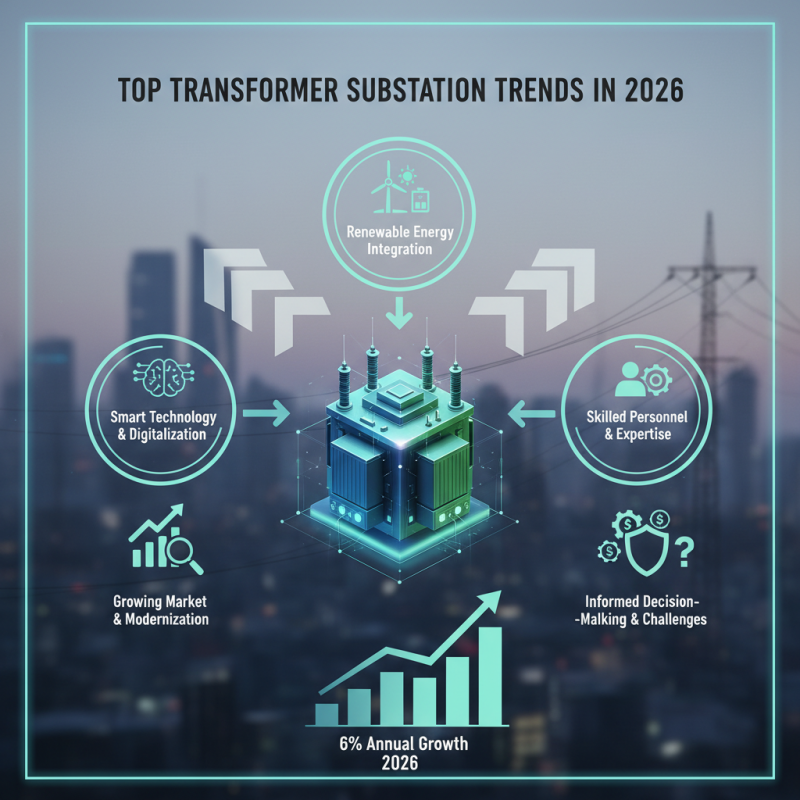
As we approach 2026, the landscape of Transformer Substations is evolving rapidly. Industry reports show that the global transformer substation market is projected to grow by over 6% annually. This growth is driven by increasing energy demands and the need for modernization in aging infrastructure. Experts highlight that adapting to these trends is crucial for buyers.
Dr. Lisa Reynolds, a leading authority in energy systems, emphasizes, "The future of transformer substations hinges on smart technology and renewable energy integration." This statement reflects the ongoing shift towards more efficient and environmentally friendly solutions. Innovations in automation and digitalization are not just trends; they are now necessities.
However, challenges remain. Many buyers struggle to balance cost with functionality. The need for skilled personnel is also a growing concern. These complexities underline the importance of informed decision-making when investing in transformer substation technologies. Understanding market trends and emerging technologies can help mitigate these issues.
Emerging Technologies Transforming Transformer Substation Design
As transformer substations evolve, new technologies reshape their design. Smart grids utilize advanced analytics and communication to enhance efficiency. These innovations enable real-time monitoring and remote control of substations. This level of connectivity improves reliability and reduces outages.
Energy storage systems also gain traction. They stabilize grid performance and accommodate renewable energy sources. Integrating battery technology into substations helps manage fluctuating demand. However, substantial investments are needed in infrastructure and training.
Sustainability remains a focal point in substation design. Green technologies reduce environmental impact. While progress is evident, challenges persist in achieving universal adoption. The industry must navigate regulatory hurdles and varying regional needs. This balancing act is crucial for maximizing the benefits of emerging technologies.
Top Transformer Substation Trends in 2026
| Trend | Description | Impact on Design | Estimated Adoption Rate by 2026 |
| Smart Grid Integration | Incorporating advanced communication technologies for real-time data. | Higher efficiency and reduced outage times. | 80% |
| Modular Substations | Prefabricated components that allow for quicker installation. | Reduced project timelines and lower costs. | 65% |
| Renewable Energy Integration | Facilitating the connection of renewable energy sources to the grid. | Increased reliance on sustainable energy solutions. | 75% |
| Enhanced Cybersecurity Measures | Implementation of strong security protocols and monitoring systems. | Protection against potential cyber threats. | 90% |
| Energy Storage Solutions | Incorporation of battery storage systems for grid stability. | Improved energy management and availability. | 70% |
Key Sustainability Practices for Modern Transformer Substations
The transition towards sustainable practices in transformer substations is crucial for future energy efficiency. According to the International Energy Agency, the global demand for electricity is projected to rise by 30% by 2030. This surge necessitates innovative designs focused on sustainability. Incorporating renewable energy sources and energy storage systems can significantly reduce greenhouse gas emissions. Many substations aim to integrate photovoltaic systems, providing clean energy while lowering operational costs.
Modern substations are also embracing advanced technologies to improve efficiency. For instance, the use of digital twin technology allows real-time monitoring of equipment performance. This approach helps in predictive maintenance, which can decrease downtime by 25%. Additionally, research indicates that substations employing smart grid technology improve energy distribution efficiency by up to 15%. However, not all substations have adopted these innovations. Many still rely on outdated infrastructure, hindering sustainability efforts.
Implementing eco-friendly practices is not just about technology. It involves building materials and designs that reduce environmental impact. Using recycled materials can lead to a 20% reduction in the carbon footprint of new installations. Furthermore, it's essential to consider local ecosystems when selecting sites for new substations. Balancing development with environmental conservation remains a significant challenge. Stakeholders must refocus their efforts on improving the sustainability of transformer substations to meet future energy demands responsibly.
Top Transformer Substation Trends in 2026
Impact of Digitalization on Transformer Substation Operations
The impact of digitalization on transformer substation operations is profound. Digital tools are transforming how these substations are monitored and managed. Advanced sensors and IoT devices collect real-time data, enhancing operational efficiency. This data helps in predictive maintenance, reducing downtime and costs.
Tips: Embrace data analytics. This can lead to smarter decisions. Consider investing in training programs for your team. Knowledge of digital tools is crucial for effective implementation.
Digital transformation offers challenges too. Integrating new technologies can be complex. Staff may resist changes, fearing job loss. Yet, addressing these concerns is essential for a smooth transition. Training programs should focus on skill upgrade rather than replacement. Open communication fosters a supportive environment.
With digitalization, security risks also increase. Cyber security must be a top priority. Regular updates and security audits are necessary to safeguard data. Balancing innovation and safety is key to future success in transformer substations.
Regulatory Changes Shaping the Future of Transformer Substations
The landscape of transformer substations is changing rapidly due to new regulatory changes. By 2026, buyers must navigate these changes to stay competitive. Recent reports indicate that compliance costs associated with environmental regulations could rise by 15%. This prompts organizations to seek solutions that balance compliance and cost-effectiveness.
Moreover, governments are enforcing stricter emissions standards. The International Energy Agency forecasts that energy sector emissions will fall by 30% by 2026, compelling substations to adopt more sustainable practices. Buyers should evaluate new technologies, such as digital monitoring systems, which could enhance compliance while optimizing performance.
Tip: Consider investing in training that focuses on regulatory changes. Keeping your team informed about the latest standards can minimize risks.
Despite the progress, some buyers find adapting difficult. A survey revealed that 40% of stakeholders are unsure how to implement these changes effectively. This uncertainty highlights the need for reliable guidance in transitioning toward compliant solutions.
Tip: Collaborate with professionals who specialize in regulatory compliance. Their expertise can help navigate complex requirements.
Market Trends Influencing Buyer Decisions for Transformer Substations
The transformer substation market is evolving rapidly. Buyers today face numerous factors that influence their decisions. Understanding these trends can lead to better strategic planning. Increased emphasis on sustainability significantly affects buyer choices. Companies now prioritize energy efficiency in their purchasing criteria. Innovations like smart grid technology also enhance operational efficiency.
Cost considerations are pivotal for buyers. The initial investment in transformer substations can be significant. However, long-term savings from reduced energy consumption are compelling. Many buyers are uncertain about which technology offers the best ROI. Additionally, local regulations can complicate the decision-making process. Compliance with these regulations is not always straightforward.
Market research reveals the growing importance of resiliency. Buyers are looking for solutions that endure extreme weather events. Frequency of natural disasters is rising, prompting a shift in priorities. Reliability is no longer an option; it’s a necessity. The need for flexibility in design also highlights changing buyer preferences. Buyers must navigate these complexities while striving for optimal performance. The landscape for transformer substations will likely continue to change in the coming years.