Buying semiconductors globally is not simply a search for the lowest unit price. It is a decision about capability, continuity, and trust. A reliable semiconductor company must deliver stable specifications, documented quality, and realistic production schedules. Behind one component may stand a wafer fab, an outsourced assembly partner, a materials supplier, or a design-house network. Each model carries different strengths and risks.
Morris Chang, founder of TSMC, once said, “The semiconductor industry is a very capital-intensive industry.” That observation still matters. Advanced manufacturing requires enormous investment, while mature-node producers may offer better availability for automotive, industrial, and power applications. Global buyers also need to examine certification records, process maturity, audit access, geographic exposure, and product-lifecycle policies. A company with impressive technology may still struggle with communication or small-volume orders. That weakness is easy to overlook.
This guide introduces ten semiconductor company types that buyers commonly encounter, from integrated device manufacturers and pure-play foundries to fabless designers, OSAT providers, equipment makers, material suppliers, memory specialists, and analog-power producers. Each type serves a different point in the supply chain. Some control intellectual property. Others control manufacturing capacity. A few provide the tools that make production possible.
No category is perfect. A strong supplier today may face shortages tomorrow. Buyers should compare technical fit with commercial resilience, not reputation alone. The practical questions are concrete: Can the supplier support qualification samples? Can it explain lead times clearly? Can it maintain traceability when demand rises? These details often decide whether a global sourcing plan succeeds—or quietly fails.
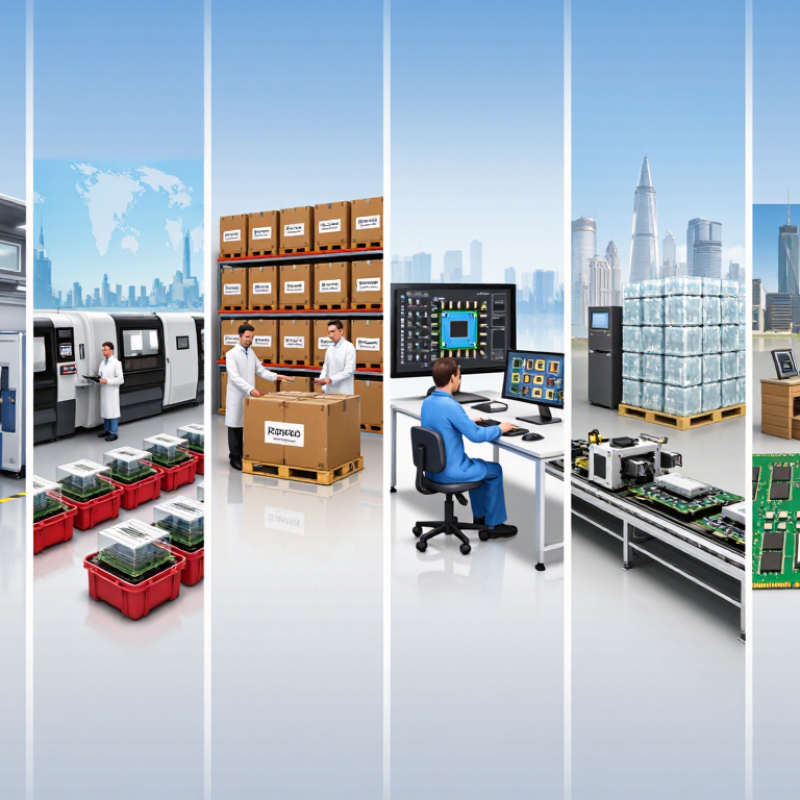
Global buyers rarely purchase from one semiconductor company type alone. The supply chain works more like a relay, with each company carrying a different technical and commercial responsibility. Integrated manufacturers design, produce, and sometimes test chips within one organization. Fabless companies focus on circuit architecture and product development, while contract foundries manufacture wafers to strict process requirements. Each handoff affects quality, cost, lead time, and supply continuity. That detail matters.
Outsourced assembly and testing providers package chips, inspect connections, and perform electrical checks before shipment. Materials suppliers provide wafers, chemicals, gases, and packaging components. Equipment manufacturers support lithography, etching, cleaning, measurement, and factory maintenance. Design-service firms help buyers adapt processors for vehicles, medical devices, communications equipment, or industrial controls. Distributors add inventory access, documentation, and regional logistics, especially when direct purchasing is impractical.
Experienced buyers examine more than a company’s product page. They review production locations, qualification records, change-control procedures, testing standards, and realistic capacity. A low quoted price can hide longer validation work or fragile logistics. No map is perfect. Supply-chain roles may overlap, and one supplier can depend on several others for critical inputs. Buyers should also ask how a company handles process changes, quality disputes, weather disruptions, and allocation pressure. These questions often reveal operational maturity better than polished sales language. Reliability is built in the less visible steps.
The ten main semiconductor company types form a connected global supply chain. Integrated device manufacturers design and produce chips in their own facilities. Fabless companies create chip designs but outsource wafer production. Foundries manufacture wafers for multiple customers. This model supports flexibility, though capacity can change quickly.
OSAT providers handle assembly, packaging, and final testing. Semiconductor IP companies license reusable circuit designs. EDA companies provide software for chip design, simulation, and verification. Equipment suppliers build deposition, lithography, cleaning, and inspection tools. Materials suppliers provide wafers, gases, chemicals, and packaging substances. Distributors connect manufacturers with regional buyers, while independent laboratories perform reliability and compliance testing. These roles overlap sometimes. That can confuse new buyers.
Tips: Ask who owns the design, wafer process, testing, and certifications. Request recent quality records, production capacity, traceability documents, and realistic delivery ranges. Visit the facility when possible. A polished presentation is not proof of stable manufacturing. My practical mistake was trusting a short lead-time promise without checking allocation history. Buyers should compare technical support, failure analysis procedures, and long-term availability, not only unit price. Reserved capacity may matter more than a small discount.
| Rank | Semiconductor Company Type | Primary Role in the Value Chain | Typical Products or Services | Common Global Buyers | Manufacturing Model | Capital Intensity | Typical Qualification Cycle | Main Purchasing Considerations |
|---|---|---|---|---|---|---|---|---|
| 1 | Fabless Semiconductor Design Houses Design-led | Design chips and outsource wafer fabrication and usually assembly and testing to specialized suppliers. | Processors, connectivity chips, application-specific integrated circuits, accelerators, and system-on-chip devices. | Cloud infrastructure companies, electronics manufacturers, automotive suppliers, industrial equipment makers, and original equipment manufacturers. | Asset-light design model using external foundries and outsourced assembly and test providers. | Medium | Approximately 6–24 months, depending on system redesign and safety requirements. | Performance, software support, power efficiency, long-term availability, technical documentation, and design-in support. |
| 2 | Pure-Play Foundries Wafer manufacturing | Manufacture wafers for customers that do not operate their own leading production facilities. | Logic, analog, radio-frequency, high-voltage, embedded-memory, image-sensor, and specialty-process wafers. | Fabless chip designers, integrated device manufacturers, automotive electronics suppliers, and industrial technology companies. | Third-party manufacturing based on established, specialty, or advanced process technologies. | Very high | Approximately 9–30 months, including process selection, tape-out, qualification, and production ramp. | Process node, wafer size, capacity allocation, yield history, process portability, quality systems, and supply continuity. |
| 3 | Integrated Device Manufacturers Design and manufacturing | Design, manufacture, package, and sell semiconductors within an integrated corporate production network. | Microcontrollers, memory, power devices, sensors, processors, analog integrated circuits, and automotive chips. | Automotive manufacturers, consumer electronics companies, industrial automation firms, telecommunications suppliers, and medical-device manufacturers. | Primarily captive manufacturing, sometimes supplemented by external production partners. | Very high | Approximately 6–24 months; automotive and medical applications may require longer approval periods. | Product continuity, multi-site capacity, functional safety, traceability, quality certifications, and change-control procedures. |
| 4 | Outsourced Semiconductor Assembly and Test Providers Packaging and testing | Package semiconductor dies and perform electrical, reliability, and final production testing. | Wire-bond packages, flip-chip packages, wafer-level packages, system-in-package assemblies, burn-in, and automated testing. | Fabless chip designers, foundries, integrated device manufacturers, electronics contract manufacturers, and module suppliers. | Specialized outsourced assembly, packaging, and test facilities serving multiple semiconductor customers. | High | Approximately 3–18 months, depending on package complexity and qualification requirements. | Package design capability, thermal performance, test coverage, yield, capacity, traceability, and geographic diversification. |
| 5 | Semiconductor Equipment Manufacturers Production equipment | Supply the machinery used to fabricate, inspect, clean, deposit, etch, assemble, and test semiconductors. | Deposition systems, etching systems, lithography-related equipment, inspection tools, metrology systems, dicing machines, and test equipment. | Wafer fabrication plants, specialty semiconductor manufacturers, packaging facilities, research institutions, and government laboratories. | Capital-equipment production with complex engineering, installation, service, and spare-parts operations. | Very high | Approximately 6–24 months, including factory acceptance, installation, process integration, and customer qualification. | Tool productivity, process precision, uptime, service response, spare-parts availability, software integration, and total cost of ownership. |
| 6 | Semiconductor Materials Suppliers Materials and consumables | Provide the highly controlled materials consumed during wafer fabrication, packaging, and testing. | Silicon wafers, specialty chemicals, photoresists, gases, sputtering targets, lead frames, substrates, bonding materials, and packaging compounds. | Foundries, integrated device manufacturers, packaging and test providers, laboratories, and semiconductor equipment companies. | Process-controlled chemical, wafer, metal, ceramic, polymer, and engineered-material manufacturing. | High | Approximately 3–18 months, depending on material sensitivity and process qualification requirements. | Purity, particle control, consistency, lot traceability, supply security, regulatory compliance, and compatibility with customer processes. |
| 7 | Electronic Design Automation and Semiconductor IP Providers Design infrastructure | Supply software tools, reusable circuit blocks, verification systems, and design technologies used to create chips. | Design automation software, verification tools, processor cores, interface IP, memory IP, physical-design libraries, and security IP. | Fabless design houses, integrated device manufacturers, research institutions, system companies, and semiconductor start-ups. | Software licensing, subscription, royalty, support, and engineering-services models rather than wafer manufacturing. | Low to medium | Approximately 1–12 months for licensing; several years for complex chip development and verification. | Tool compatibility, process-design-kit support, verification quality, licensing terms, security, technical support, and update policy. |
| 8 | Analog, Power, and Discrete Semiconductor Specialists Power and signal management | Develop devices that manage power, convert signals, regulate voltage, and control electrical loads. | Power transistors, rectifiers, voltage regulators, amplifiers, data converters, interface devices, and power-management integrated circuits. | Automotive electronics manufacturers, industrial equipment makers, energy systems companies, appliance producers, and consumer-device manufacturers. | Own-fabricated or outsourced production, commonly using mature or specialty process technologies. | High | Approximately 6–24 months; automotive and industrial applications often require extensive reliability testing. | Electrical efficiency, thermal performance, operating temperature, reliability, package format, lifecycle support, and qualification data. |
| 9 | Sensor and MEMS Manufacturers Sensing technologies | Convert physical conditions into electrical signals for monitoring, control, navigation, and automation. | Pressure sensors, inertial sensors, microphones, environmental sensors, timing devices, microfluidic components, and optical sensors. | Automotive system suppliers, mobile-device manufacturers, industrial automation companies, medical-device makers, and consumer-product manufacturers. | Specialized MEMS or sensor fabrication, often combined with separate electronics, calibration, and packaging operations. | High | Approximately 6–24 months, including calibration, environmental testing, and application-level validation. | Accuracy, sensitivity, drift, calibration stability, environmental resistance, package size, interface compatibility, and repeatability. |
| 10 | Semiconductor Distributors and Technical Supply Partners Global sourcing and fulfillment | Connect semiconductor producers with buyers while providing inventory, logistics, technical coordination, and demand support. | Component distribution, authorized sourcing, buffer inventory, regional fulfillment, obsolescence management, and supply-chain services. | Original equipment manufacturers, contract manufacturers, design firms, research organizations, and industrial maintenance providers. | Non-manufacturing commercial model based on supplier networks, warehouses, logistics systems, and technical sales teams. | Medium | Immediate to several months for standard products; longer for allocation, compliance, or engineering-support programs. | Product authenticity, inventory visibility, delivery reliability, traceability, warranty terms, technical support, and compliance documentation. |
Global buyers rely on ten semiconductor company types to move a chip from concept to shipment. Fabless design houses develop chip architectures, circuit layouts, and power targets. Integrated device manufacturers manage both design and wafer production under one organization. Pure-play foundries manufacture customer designs on specialized process nodes. Specialty foundries support sensors, power devices, radio components, and other demanding applications.
Electronic design automation vendors provide simulation, verification, and physical layout tools. Semiconductor intellectual property licensors supply tested processor cores, memory blocks, and interface designs. Equipment manufacturers build lithography, deposition, inspection, and packaging systems. Materials suppliers provide wafers, gases, photoresists, chemicals, and advanced substrates. Their consistency affects yield, not just purchasing cost. Outsourced assembly and test providers package dies, inspect connections, and perform thermal or electrical testing. Distributors and logistics specialists coordinate inventory, documentation, secure transport, and delivery schedules.
Each type solves a different risk. A design partner can shorten development, while a foundry controls wafer capacity and process compatibility. Packaging providers influence heat removal and final reliability. Distributors can reduce regional delays, but they may add another communication layer. The boundaries are not always clean. Some suppliers offer several capabilities, which can confuse qualification teams. Buyers should check process data, quality records, test coverage, lead times, and change-control procedures. A polished presentation is not enough. Real samples, audit evidence, and clear escalation contacts often reveal the practical difference.
Top 10 Semiconductor Company Types for Global Buyers
Key Differences in Capabilities, Business Models, and Supply Networks
Global buyers should compare semiconductor companies by function, not reputation alone. Design houses create chip architectures but usually depend on outside factories. Foundries manufacture wafers for many customers, while integrated manufacturers control design and production under one structure. Assembly and testing providers package chips, inspect connections, and prepare devices for shipment. Memory, analog, power, compound-semiconductor, equipment, and materials specialists serve narrower technical needs. Each type carries different strengths, costs, and supply risks.
Tips: Ask for process-node details, production locations, qualification records, and realistic capacity commitments. Check whether a supplier owns key steps or relies on subcontractors. Request failure-rate data and sample traceability. Small details matter.
Business models shape purchasing decisions. A design-focused supplier may offer faster customization but limited manufacturing control. A foundry may provide stable production, yet allocation can change during demand surges. An integrated producer may simplify coordination, although its product range may be less flexible. Regional supply networks also affect lead times, export documentation, inventory buffers, and recovery after disruptions. Experience shows that a low quoted price can hide testing, logistics, or redesign costs. No category is automatically best. A clean comparison still leaves uncertainty, especially when forecasts are optimistic. Buyers should score technical fit, financial resilience, quality systems, and communication before signing long-term agreements.
This benchmark compares ten semiconductor company types using normalized industry characteristics. Scores reflect typical operating models: manufacturing control, design and IP ownership, capital intensity, and supply-network reach. Higher values indicate greater responsibility or influence in each area.
Top 10 Semiconductor Company Types for Global Buyers
Global buyers now compare more than unit prices. WSTS’s Spring 2025 Forecast projects semiconductor sales of about $697 billion in 2025, an 11.2% annual increase. This pressure makes supplier selection a risk decision, not merely a sourcing exercise. Buyers should distinguish integrated manufacturers, fabless designers, foundries, packaging and testing providers, distributors, design houses, intellectual-property suppliers, equipment makers, materials specialists, and niche component producers.
Start with evidence. Request process qualifications, recent audit results, yield trends, change-control records, and capacity commitments. Confirm whether the partner owns production assets or relies on subcontractors. For critical components, compare lead-time history across normal and constrained periods. A supplier promising 12 weeks means little without shipment data. Not promises.
Commercial checks also need technical depth. Compare lifecycle support, second-source options, export documentation, cybersecurity controls, and failure-analysis response times. The Semiconductor Industry Association reported global sales of $627.6 billion in 2024, showing the market’s scale and competitive intensity. Yet a lower quotation may hide engineering changes, testing gaps, or expensive minimum orders. Score each partner against weighted criteria, such as quality at 30%, continuity at 25%, technical fit at 20%, cost at 15%, and governance at 10%. Adjust these weights by application. No scorecard is perfect. A careful buyer should revisit assumptions after sampling, factory validation, and the first three deliveries, because early confidence can be misleading.