Top 10 Semiconductor Companies Revolutionizing Technology Today?
The semiconductor industry is a cornerstone of modern technology. In 2022, the global semiconductor market was valued at approximately $600 billion. This value is projected to grow, driven by innovations in artificial intelligence and 5G technologies. Leading semiconductor companies play a crucial role in this transformation.
Firms like Intel, TSMC, and Samsung Electronics are at the forefront. These semiconductor companies not only lead in manufacturing but also in research and development. Their investments in R&D reached around $80 billion in 2021. However, reliance on a few companies raises concerns about supply chain vulnerabilities.
As we explore the top 10 semiconductor companies revolutionizing technology, we should consider their power and responsibility. Each company's innovations shape industries, yet their market dominance can stifle competition. It prompts questions about sustainability and equitable growth within the sector.
Leading Semiconductor Innovators Shaping the Future of Electronics
The semiconductor industry plays a crucial role in driving technological change. As of 2023, the global semiconductor market is projected to reach $600 billion, according to industry reports. Innovations in materials and processes are at the core of this growth. These advancements are not just evolutionary; they are revolutionary.
This rapid progression influences various sectors. The push for smaller, faster, and more efficient chips drives advancements in artificial intelligence and machine learning. Preliminary data suggests that AI chip demand will grow by 25% annually over the next five years. Yet, the industry also faces challenges. Supply chain disruptions have highlighted vulnerabilities. Many companies are rethinking their strategies to enhance resilience while balancing innovation.
An emphasis on sustainability is also prominent. Many semiconductor manufacturers are now targeting carbon neutrality by 2030. This reflects a broader trend towards environmentally responsible practices. However, achieving these goals requires both technological breakthroughs and significant investment. The future of electronics relies heavily on the ability of these innovators to solve pressing issues while continuing to push boundaries.
Key Technologies Developed by Top Semiconductor Companies
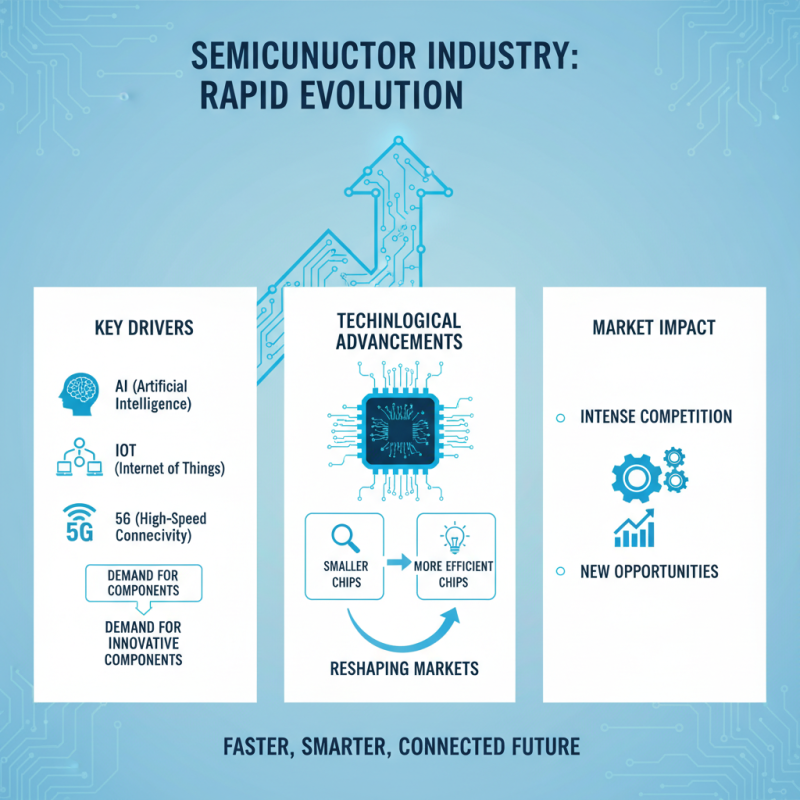
The semiconductor industry is pivotal in shaping modern technology. Key technologies developed by leading companies include advanced chip designs, AI accelerators, and next-gen process nodes. The shift towards smaller and more efficient chips has led to groundbreaking innovations in various sectors. Notably, 5G technology and IoT devices rely heavily on high-performance semiconductors.
In recent market analyses, the semiconductor market is projected to reach $1 trillion by 2030, driven by the demand for AI and machine learning applications. Companies are focusing on energy-efficient solutions to combat rising power consumption. This shift is creating a need for enhanced thermal management and lower voltage operation.
Tip: Always keep an eye on emerging technologies. Innovations in materials, like graphene, could disrupt traditional silicon-based circuits. Stay updated on trends and potential market leaders.
Amidst all these advancements, challenges persist. Supply chain issues and fabrication complexities remain hurdles. Companies must refine their processes continuously. This introspection can lead to more robust solutions and better end products.
Top 10 Semiconductor Companies Revolutionizing Technology Today
This bar chart illustrates the impact of different semiconductor technologies developed by leading companies in the industry. Each bar represents the estimated contribution of various technologies to overall advancements in fields such as AI, IoT, and computing.
Impact of Semiconductor Giants on Global Supply Chains
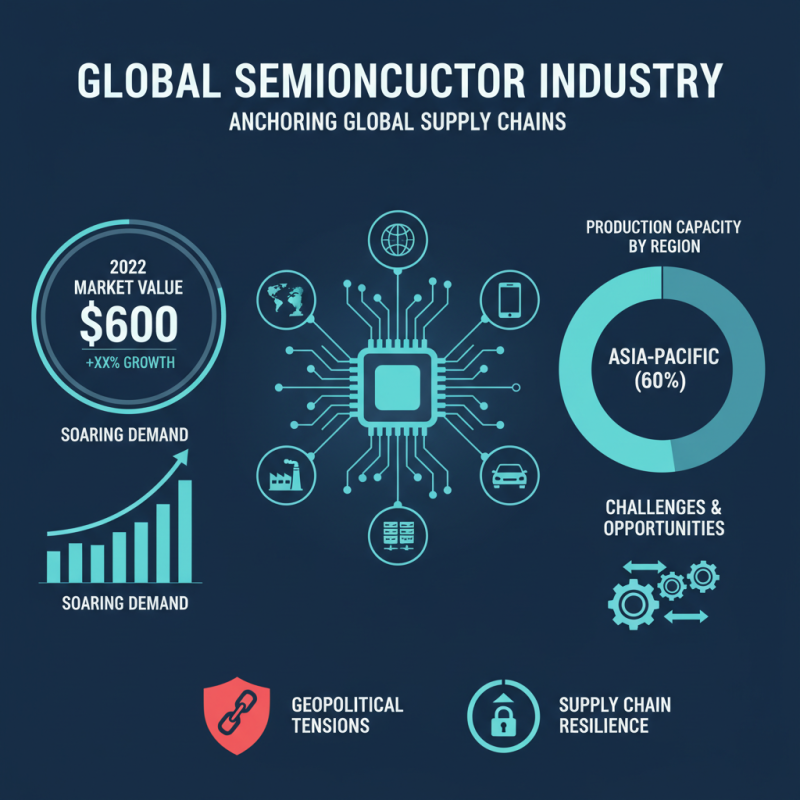
The semiconductor industry plays a pivotal role in global supply chains. With demand soaring, the sector faces both challenges and opportunities. In 2022, the global semiconductor market reached $600 billion, highlighting its crucial position. The Asia-Pacific region accounts for over 60% of the production capacity. However, geopolitical tensions have raised concerns about supply chain reliability.
Many manufacturers struggle with material shortages and logistical issues. For instance, silicon wafer supply has been within tight parameters, affecting production timelines. Reports indicate that lead times for semiconductors have stretched to over 20 weeks. This growing disparity can disrupt industries dependent on these critical components, including automotive and consumer electronics. The reliance on a few key players raises questions about the resilience of the entire ecosystem.
Moreover, technological advancements lead to a constant state of evolution. Companies are investing heavily in next-generation processes and AI applications. Yet, this push comes with high costs. The question remains—how can companies balance innovation with sustainable practices? The semiconductor giants must navigate these challenges while maintaining global supply chains that are robust and adaptable.
Role of Semiconductor Companies in Advancing AI and Machine Learning
Semiconductor companies play a crucial role in the advancement of artificial intelligence (AI) and machine learning (ML). These industries rely heavily on high-performance chips to process vast amounts of data. According to a recent report, the AI semiconductor market is projected to reach $30 billion by 2026. This growth is driven by the increasing demand for AI applications in various sectors like healthcare, finance, and automotive.
The demand for faster and more efficient processing units is insatiable. Chips designed specifically for AI tasks can significantly enhance machine learning models. They can reduce training times from weeks to mere hours. However, challenges persist. For instance, as companies push for more powerful chips, energy consumption becomes a concern. Balancing performance and sustainability is vital. The lack of raw materials for chip production is another issue. Companies must innovate to overcome these hurdles.
Moreover, not all advances are seamless. The complexity of integrating AI capabilities into existing systems can lead to unexpected setbacks. Misalignment between AI models and hardware requirements often slows innovation. The future of AI hinges on these semiconductor advancements. Nonetheless, as the landscape evolves, so must the strategies companies employ to remain competitive in this rapidly shifting market.