Choosing the right Steel Fabrication Equipment can shape productivity, safety, and product quality for years. A machine may look impressive in a supplier’s showroom, yet perform poorly in a crowded workshop. Real decisions require more than comparing prices and motor power.
This guide examines ten practical tips for selecting equipment that matches your materials, workload, floor space, and operator skills. It considers cutting thickness, bending capacity, welding compatibility, control systems, maintenance access, and energy use. For example, a plasma cutter rated for 25-millimeter steel may struggle with continuous production at that limit. Capacity claims need careful verification.
Safety matters every day.
Reliable equipment should include clear guarding, emergency stops, stable controls, and accessible documentation. Reputable manufacturers provide test data, training resources, spare-parts support, and realistic service commitments. Independent reviews and advice from experienced fabricators can reveal problems hidden behind polished brochures. Equipment should also support recognized workplace safety requirements and proper operator training.
No checklist is perfect. A growing workshop may choose a machine that becomes restrictive within two years. Another company may overpay for features rarely used. Honest evaluation means recording actual job sizes, production volumes, downtime causes, and maintenance history before purchasing. Site visits, sample cuts, and supplier demonstrations can expose weaknesses early. The best choice balances present needs with sensible future growth, without treating every advanced feature as essential.
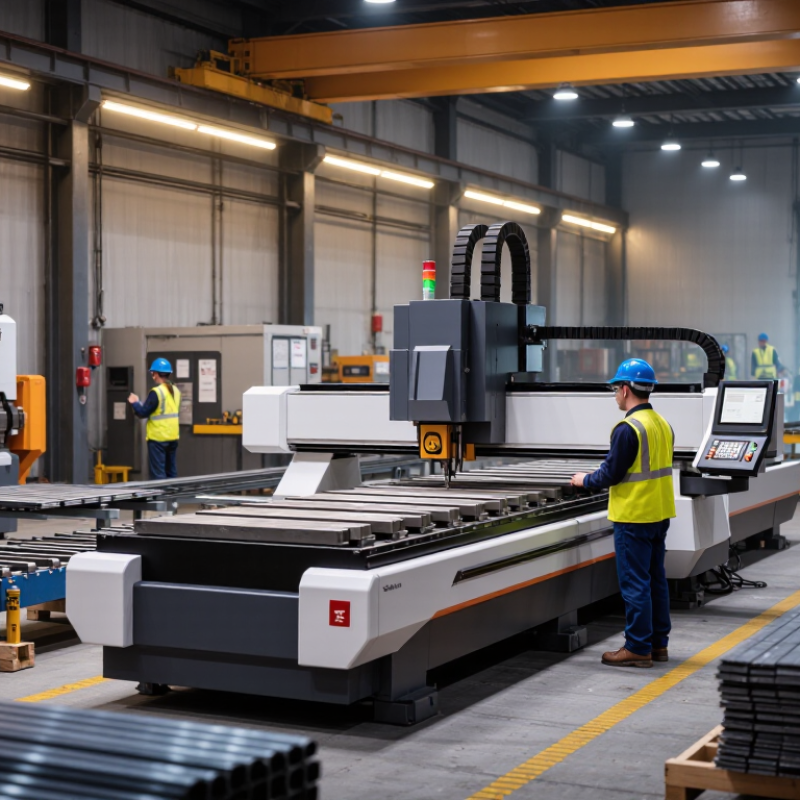
Before choosing equipment, document your daily production volume, steel grades, thicknesses, and maximum component sizes. Include cutting, drilling, bending, welding, or forming requirements. A machine designed for thin sheet may struggle with thick structural plate. That mismatch can cause slow cycles, poor accuracy, and unnecessary repairs.
I have seen teams focus on equipment speed while overlooking material variation. It was an expensive lesson. Carbon steel, stainless steel, and coated materials may require different power levels, tooling, extraction, and cooling systems. Record acceptable tolerances, edge quality, hole diameters, and bend angles. These details make supplier comparisons more reliable.
Describe the heaviest and lightest materials you expect to process. Add real measurements, not rough estimates. Consider future work, but avoid buying capacity you may never use. A larger machine is not automatically better. It can consume more floor space, energy, and operator attention.
Ask for sample trials using your actual steel specifications and production drawings. Inspect cut edges, dimensional accuracy, surface marks, and repeatability. Check how quickly operators can change settings. Small delays become costly across hundreds of parts. Also review maintenance access, training requirements, spare-part availability, and documented safety procedures. Supplier claims should support your testing, not replace it.
Choosing steel fabrication equipment starts with comparing processing methods, not chasing impressive specifications. Laser cutters suit detailed profiles, tight tolerances, and thinner sheet work. Plasma systems handle thicker plate faster, but their heat-affected edges may need grinding. Oxy-fuel cutting remains practical for heavy sections, although it is slower and less precise. Waterjet cutting avoids heat distortion, yet operating costs and cutting time can rise.
Forming equipment requires a different comparison. A press brake can create accurate bends, but its tonnage, bed length, tooling, and back-gauge control must match the job. Roll-forming equipment supports repeated curves and long sections. A bandsaw offers clean, economical cuts for structural steel, while a cold saw can improve repeatability on smaller profiles. Check real capacity, not only the maximum rating.
Processing sequence matters as much as machine capability. A laser-cut 12-millimeter plate may reduce secondary work, but a poorly selected nozzle or gas setting can leave rough edges. Welding equipment should match steel thickness, joint design, production volume, and operator skill. In my workshop experience, buying for peak capacity created unused floor space and higher maintenance costs. I should have measured weekly workloads more honestly. Ask for sample cuts, bend tests, cycle times, energy use, and service access before deciding. A convenient machine is not always the most reliable one.
10 Essential Tips for Choosing Steel Fabrication Equipment
Precision should guide every equipment decision. Check cutting tolerance, repeatability, and edge quality under realistic workshop conditions. A machine may appear accurate during a short demonstration, yet drift after several hours. Ask for test cuts using your own steel thicknesses. Measure hole placement, bevel angles, and finished dimensions. Small errors can multiply during assembly. I once trusted a specification sheet too quickly, and setup adjustments consumed more time than expected. That experience changed how I evaluate equipment.
Automation can improve consistency, but it should support skilled operators rather than replace judgment. Examine programming controls, sensor feedback, material handling, and error alerts. Simple interfaces often reduce training time and prevent avoidable mistakes. Review whether the system records production data, maintenance events, and rejected parts. Operating efficiency depends on more than speed. Consider power consumption, changeover time, tool access, ventilation needs, and routine cleaning. A fast machine can still be inefficient if operators wait for materials or frequent recalibration.
Tips: Compare total operating cost, not only purchase price. Request a supervised trial. Check training quality and service response times. Inspect safety controls before signing. Leave room for future workloads, but avoid buying capacity you cannot use. Document acceptance measurements. Recheck them after installation. Reliable decisions come from evidence, practical observation, and honest reflection.
Safety features should be inspected before production speed or cutting capacity. Look for guarded moving parts, emergency stops, overload protection, and clear warning indicators. Test each control with gloves, eye protection, and normal work lighting. A safety switch that is difficult to reach will not help during a jam.
Maintenance needs deserve equal attention. Ask how often blades, filters, hydraulic lines, and electrical connections require inspection. Choose equipment with accessible service points and readable maintenance instructions. Record vibration, unusual noise, and heat during weekly checks. These small signals often appear before expensive failures.
In one workshop I observed, a neglected filter reduced cutting accuracy within weeks. The machine was not defective. Our maintenance routine was weak. That lesson still influences equipment evaluations.
Operator training should include setup, safe loading, shutdown, fault reporting, and emergency response. Request practical training, not only a manual or short demonstration. New operators should practice with scrap steel before handling valuable material. Supervisors can use a simple skills checklist and observe the first production shifts.
Training must cover predictable mistakes, such as bypassing guards or reaching into a moving area. Even experienced workers need refresher sessions after repairs or process changes.
Keep training records, but check whether workers can perform each step. Paperwork alone proves very little.
10 Essential Tips for Choosing Steel Fabrication Equipment
The purchase price rarely reflects the real cost of steel fabrication equipment. Include installation, tooling, energy, training, maintenance, downtime, and financing. The International Energy Agency reported that industry used about 37% of global final energy in 2022. An inefficient cutting or welding system can quietly increase production costs every day. I still underestimate compressed-air losses during site visits. That mistake is expensive.
Tip 1: Build a five-year total-cost model. Compare energy consumption, consumables, service intervals, expected output, and operator requirements. Ask suppliers for documented cycle-time and power data, not optimistic estimates. Tip 2: Test the equipment with your actual steel thicknesses, joint designs, and production volumes. A polished demonstration may hide setup delays. Record loading time, changeover time, scrap, and rework.
Supplier support affects availability as much as machine design. Request response-time commitments, spare-parts availability, remote diagnostics, training plans, and local service capacity. Deloitte’s 2024 Manufacturing Industry Outlook identifies labor shortages and technology adoption as major manufacturing pressures. Choose equipment that newer operators can learn safely and consistently. Tip 3: Check software compatibility, data export, and upgrade paths before signing. Future automation may require different controls. Leave room for expansion. A machine that fits today’s floor plan may restrict tomorrow’s workflow. Mistakes happen. Recheck assumptions with production and maintenance teams.
| No. | Essential Tip | What to Assess | Useful Data Point or Benchmark | Evidence to Request | Why It Matters |
|---|---|---|---|---|---|
| 1 | Define the required process | Identify whether the equipment will be used for cutting, bending, welding, drilling, punching, surface preparation, or a combination of processes. | Document material grade, thickness range, maximum part size, tolerance, daily production volume, and required finish before comparing models. | A written process specification and sample-part requirements. | Prevents buying equipment with unsuitable capacity or unnecessary features. |
| 2 | Check capacity and accuracy | Review working envelope, rated load, thickness capacity, repeatability, positioning accuracy, and duty cycle. | Select capacity with a practical reserve rather than operating continuously at the maximum rated limit; verify tolerances against drawing requirements. | Machine specification sheet, calibration records, and a witnessed sample test. | Adequate reserve capacity supports quality and reduces premature wear. |
| 3 | Calculate total cost of ownership | Include purchase price, installation, tooling, utilities, consumables, labor, maintenance, training, software, downtime, and end-of-life value. | Use a three- to five-year ownership model and compare cost per finished part or productive operating hour. | Itemized quotation, utility requirements, maintenance schedule, and consumables list. | A lower purchase price can become more expensive when operating and service costs are included. |
| 4 | Evaluate energy and utility demand | Check electrical input, compressed-air quality and flow, extraction requirements, cooling, gas consumption, and standby power. | Compare rated utility consumption with the facility’s available voltage, amperage, air pressure, ventilation, and floor infrastructure. | Utility connection diagram, consumption data, and site-readiness checklist. | Avoids unexpected infrastructure upgrades and production interruptions. |
| 5 | Review throughput, not just speed | Assess cycle time, loading and unloading, setup time, changeover, rework, nesting or programming efficiency, and operator handling. | Measure complete part-to-part time and expected utilization; rated maximum speed alone does not represent actual output. | Time study, production simulation, and sample-part throughput results. | Shows whether the equipment can meet delivery targets under normal working conditions. |
| 6 | Verify automation and software compatibility | Assess control interface, file formats, nesting, job tracking, machine connectivity, barcode support, and integration with existing systems. | Confirm support for commonly used CAD/CAM file formats and documented data-exchange methods before purchase. | Software demonstration, integration test, cybersecurity requirements, and licensing terms. | Compatibility reduces manual data entry, programming errors, and future integration costs. |
| 7 | Assess supplier service support | Review technician availability, response process, spare-parts access, remote diagnostics, warranty coverage, and service territory. | Obtain written response-time targets, warranty exclusions, preventive-maintenance responsibilities, and parts lead times. | Service-level agreement, escalation procedure, service contacts, and spare-parts policy. | Fast, predictable support limits downtime and protects production schedules. |
| 8 | Prioritize safety and compliance | Check guarding, emergency stops, interlocks, exhaust or fume control, noise, operator access, training, and applicable workplace regulations. | Require a documented risk assessment and verification that the installation meets the regulations applicable to the operating location. | Declaration of conformity, risk assessment, safety manual, and commissioning checklist. | Compliance reduces injury risk, legal exposure, and costly equipment modifications. |
| 9 | Plan for workforce capability | Evaluate operator skill requirements, programming complexity, setup procedures, maintenance access, and training materials. | Confirm training for operators, programmers, and maintenance personnel, including refresher and troubleshooting instruction. | Training agenda, manuals, competency checklist, and commissioning support plan. | Usable equipment reaches stable productivity faster and relies less on one specialist. |
| 10 | Confirm future scalability | Check modular options, additional axes, automation interfaces, tooling availability, software updates, and expansion space. | Compare current demand with the expected three- to five-year product mix, volume, material range, and staffing plan. | Upgrade roadmap, interface specifications, footprint drawing, and long-term parts and software policy. | Scalable equipment can support growth without requiring a complete replacement. |