How to Choose the Best Anti Drone Device for Your Needs?
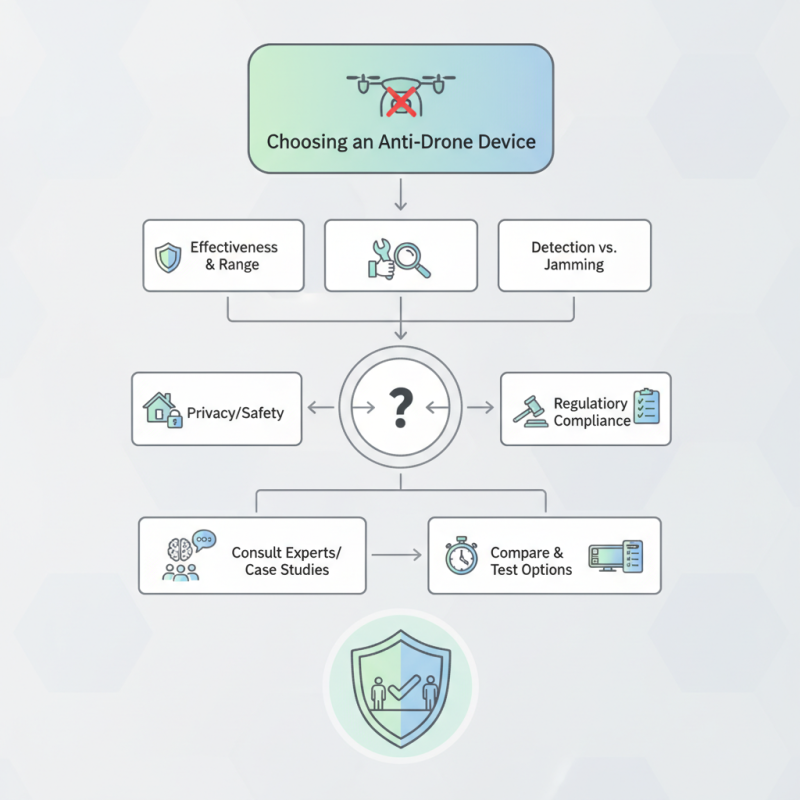
Choosing the right Anti Drone Device is crucial in today’s tech-driven world. With the rise of drone usage, security concerns have escalated. Whether for commercial or personal use, identifying the ideal solution can be challenging. Factors like effectiveness, range, and ease of use should influence your decision.
Many consumers feel overwhelmed by the numerous options available. Each Anti Drone Device has unique features, making it essential to assess them carefully. For instance, some devices specialize in jamming signals, while others focus on detection. As you research, consider consulting experts or case studies to gauge reliability.
Ultimately, the right choice should align with your specific needs and environment. Reflect on your primary concerns; are they privacy protection, safety, or regulatory compliance? Take your time to compare and test options. A well-informed decision can enhance your security and peace of mind.
Understanding the Basics of Anti-Drone Technology
Anti-drone technology is rapidly evolving. Understanding the basics is crucial for effective decision-making. These systems are designed to detect, track, and disable drones in various environments. They can utilize different methods, including radio frequency jamming, GPS spoofing, or net launching. Each method has unique applications and effectiveness.
When selecting an anti-drone device, consider your specific needs. Evaluate the operational range, target drone types, and intended environment. Not all devices will perform well in every scenario. Some might struggle in urban areas with signal interference. The price may also reflect the technology's reliability and effectiveness.
Testing the equipment before full deployment can be beneficial. Real-world conditions often differ from theoretical descriptions. Seek expert opinions to gain insight into performance challenges. This approach may reveal flaws or unexpected issues. Striving for a technology that suits your situation is vital, as your needs may change over time. Understanding these devices deeply can guide more informed decisions.
Identifying Your Specific Needs and Requirements
When considering an anti-drone device, identifying specific needs is crucial. Begin by assessing the environment in which the device will be used. Urban areas pose different challenges than rural settings. What is the primary threat? Is it surveillance, intrusion, or something else? Understanding this helps narrow options.
Tips: Define the area range you need. Some devices are effective within limited distances. Knowing this will save time and effort.
Consider the technology behind the devices. Many use jamming or advanced detection systems. What level of expertise do you have? Some systems require technical knowledge to operate efficiently. You may need to seek professional help for installation.
Tips: Check the compatibility with existing security measures. This ensures seamless integration and enhances effectiveness. Also, think about future needs. Is the device scalable? Flexibility can be valuable as your requirements evolve over time.
Reflect on the value of user feedback. Reviews and testimonials can provide insights into real-world performance. Be open to the possibility that no single device may meet all needs perfectly. Continuous adjustments and evaluations are part of the process.
Exploring Different Types of Anti-Drone Devices
When exploring various anti-drone devices, it’s crucial to understand the diversity within this market. According to a recent industry report, the global anti-drone market is projected to reach $2 billion by 2025. Different types of devices serve different needs, whether for military applications or commercial settings.
RF jamming devices emit radio frequencies to disrupt drone communications. These are particularly effective in urban areas, but they require careful calibration. Laser systems, on the other hand, provide a non-invasive approach by targeting the drone’s sensors. This method can neutralize drones without causing collateral damage. However, precision is critical, requiring highly trained personnel.
Sales data shows that multi-layered defense systems are gaining popularity, allowing users to integrate multiple devices for enhanced protection. Users often question the trade-offs between cost and effectiveness. The right choice depends heavily on specific scenarios, such as event security versus national defense. While each device offers unique benefits, the challenge lies in understanding the best fit for individual requirements.
How to Choose the Best Anti Drone Device for Your Needs? - Exploring Different Types of Anti-Drone Devices
| Device Type | Technology | Effective Range | Weight | Price Range |
| Drone Jammer | RF Interruption | 500 m | 1.5 kg | $3,000 - $10,000 |
| Net Gun | Physical Capture | 30 m | 2 kg | $1,000 - $4,000 |
| Directional Microwave System | Microwave Radiation | 1 km | 10 kg | $50,000 - $200,000 |
| Laser Defense System | Laser Disruption | 500 m | 15 kg | $100,000 - $500,000 |
| Drone Catcher | Drone Deployment | 100 m | 5 kg | $20,000 - $70,000 |
Assessing the Effectiveness and Limitations of Each Device
When evaluating anti-drone devices, understanding their effectiveness is crucial. Certain devices employ jamming technology, disrupting the communication between the drone and its controller. This blocking technique often yields fast results. However, it can also interfere with legitimate communications nearby. This creates a concern for businesses and public safety.
Another category uses detection sensors that identify drone signals and flight patterns. These systems can track multiple drones simultaneously, enhancing situational awareness. Yet, their efficacy depends on environmental conditions. Urban areas with tall buildings may hinder their performance, complicating the detection process.
Some devices focus on takedown methods, using nets or even lasers. These can neutralize drones effectively, but require precise targeting. Mistakes could lead to unintended damage or injury. Each device has scenarios where it excels and limitations that must be acknowledged. Be mindful of potential drawbacks, as no single solution guarantees complete protection.
Considering Legal and Ethical Implications of Anti-Drone Usage
As the use of anti-drone technology grows, it’s essential to consider legal and ethical implications. According to a recent industry report, 73% of surveyed security professionals express concerns about privacy violations when deploying such devices. Anti-drone systems can interfere with personal liberties, raising questions about surveillance and the right to privacy. Many experts believe that regulatory frameworks are needed. These would help balance security needs with individual rights.
Furthermore, the ethical aspect cannot be overlooked. In a survey conducted by a drone industry organization, 62% of respondents felt that these technologies could lead to potential misuse. For instance, how do we ensure that anti-drone devices are used responsibly? Setting guidelines for their application in public spaces is crucial. Misuse could also escalate tensions between authorities and citizens. Effective communication about the use of these systems is vital to maintain trust. Stakeholders must engage in open dialogues about ethical practices surrounding anti-drone tech. Without this, we risk creating more fear and resistance within communities.
Comparative Analysis of Anti-Drone Device Features
This bar chart displays various features of anti-drone devices, including detection range in meters, response time in seconds, jamming capability in percentage, price in USD, and ease of use on a scale from 1 to 5. The data helps in evaluating different options based on specific needs and considerations.