How to Choose the Best Motion Solutions for Your Business?
In today's fast-paced business landscape, choosing the right motion solutions is vital. Companies increasingly rely on advanced technology to enhance productivity and efficiency. However, selecting the ideal motion solutions can be challenging. With numerous options available, businesses must navigate a complex market to find what best meets their needs.
Understanding motion solutions is essential. These systems can vary widely in design and application. Some may focus on robotics, while others emphasize automation or control systems. Considering these differences is crucial for ensuring alignment with specific business goals. While you may feel overwhelmed, it’s important to prioritize your business objectives. Each motion solution offers unique benefits and potential drawbacks.
It’s wise to engage with industry experts. Their insights can guide you through the decision-making process. You may also need to reflect on your organization’s current capabilities. Sometimes, the best path involves not just upgrading technology but also reassessing existing systems. This reevaluation can be as important as choosing the latest innovations in motion solutions.

Understanding Motion Solutions: Types and Applications
Understanding motion solutions is crucial for various industries. These solutions help businesses optimize operations and improve efficiency. There are several types of motion solutions available today, including linear motors, servo drives, and pneumatic actuators. Each type has unique characteristics, making them suitable for different applications.
Linear motors are often used for precise movement. They provide high speed and accuracy, essential in manufacturing processes. Servo drives, on the other hand, offer control over position and speed. This makes them ideal for robotics and automation. Pneumatic actuators rely on compressed air and are widely used in packaging and assembly lines. Their simplicity and reliability often attract businesses looking for straightforward solutions.
While these options are widely recognized, the choice can be daunting. Each solution presents specific advantages and disadvantages. For instance, linear motors, while accurate, can be costly. Businesses must evaluate their needs carefully. A one-size-fits-all approach rarely works. Experimenting with different solutions can help refine operations. It's a journey of trial and reflection, guiding businesses towards optimal performance.
Assessing Your Business Needs for Motion Solutions
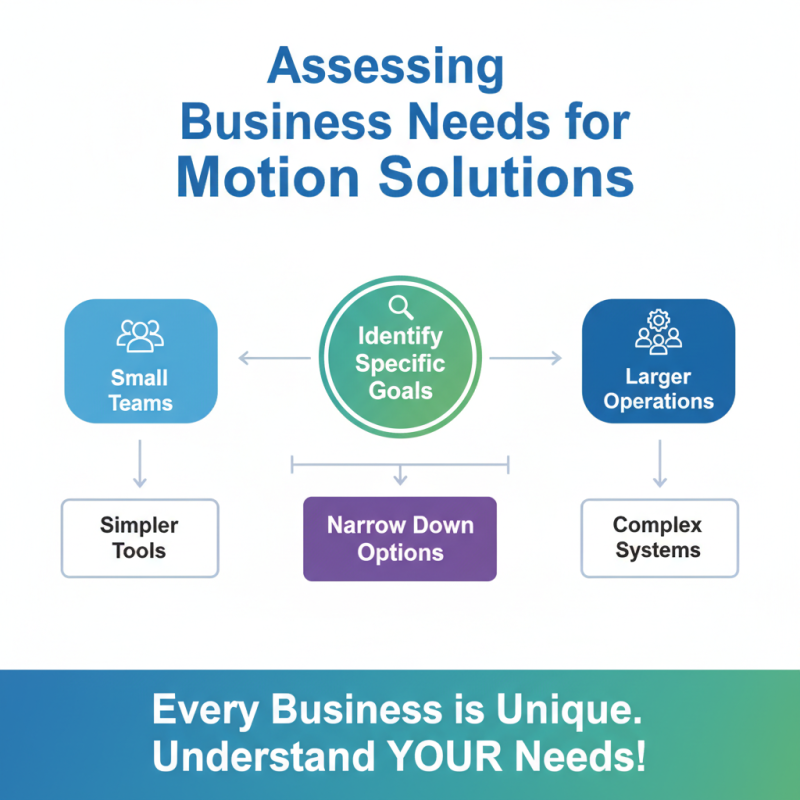
Understanding your business needs is crucial when selecting motion solutions. Every business has unique requirements. Identifying specific goals helps narrow down your options. For instance, consider the scale of your operations. Small teams might need simpler tools, while larger ones may require complex systems.
Tips: Conduct a thorough analysis of your current processes. Are they efficient? What are the bottlenecks? Engaging your team can unearth valuable insights into daily challenges. This feedback is vital for making informed decisions.
Additionally, think about your budget. High-quality motion solutions can be pricey. Sometimes, a less expensive option meets all your needs. Evaluate total cost of ownership, including support and maintenance costs. Take time to weigh short-term savings against long-term functionality.
Tips: Utilize demos and trials. Real experience with tools can illuminate their practicality. A solution may look good on paper but fail in execution. Be open to revisiting your choices as your business evolves. This flexibility may lead to better alignment with your changing needs.
Key Features to Consider in Motion Solutions
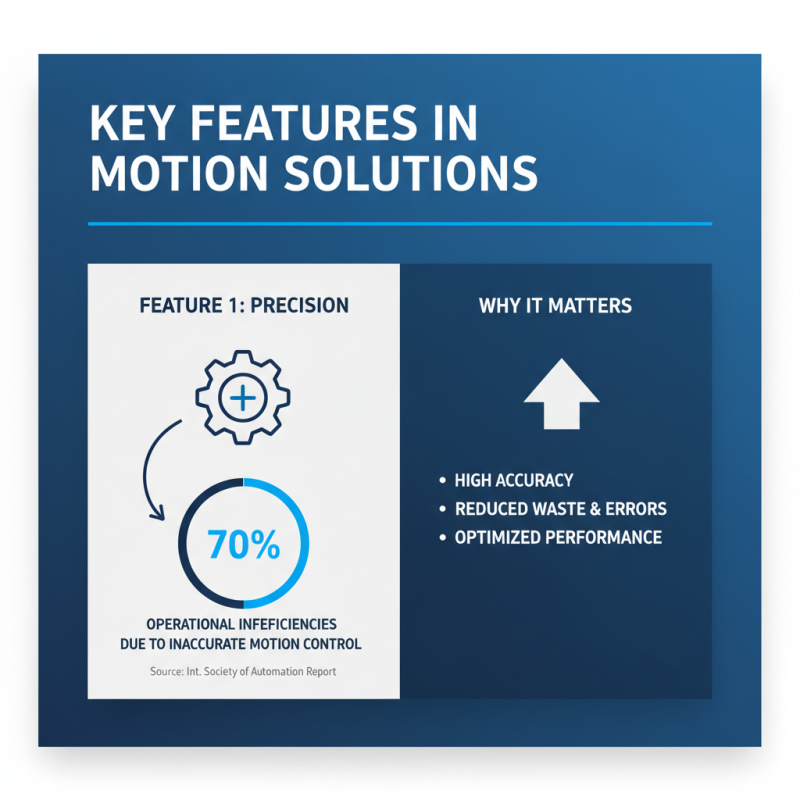
When choosing motion solutions for your business, key features are vital. The first factor to evaluate is precision. According to a report by the International Society of Automation, up to 70% of operational inefficiencies stem from inaccurate motion control. This highlights the importance of selecting solutions that provide high accuracy.
Next, consider the integration capabilities. Many solutions must fit seamlessly with existing systems. A survey from Automation World indicates that 65% of businesses struggle with integration. This gap can hinder productivity and increase costs. It's important that any selected solution supports common protocols and offers easy integration with different platforms.
Another essential feature is scalability. Your business may grow, and your motion solutions should adapt. Research from MarketsandMarkets projected that the motion control industry will grow by 8.3% from 2021 to 2026. However, businesses often overlook how future needs will impact their choices today. Investing in scalable solutions can prevent costly upgrades in the long run. Balancing these features can lead to more effective motion systems, essential for operational success.
Evaluating Vendor Capabilities and Reputation
Choosing the right motion solutions for your business relies heavily on evaluating vendor capabilities and reputation. Many businesses overlook the importance of a vendor's track record. According to a recent survey by TechValidate, 70% of companies report that choosing a trusted vendor led to improved operational efficiency. Understanding a vendor's experience in the industry can directly impact your project’s success.
When assessing a vendor, examine their case studies and client feedback. A reliable vendor should provide evidence of previous successful implementations. Look for consistent performance metrics. A report by Market Research Future highlighted that 55% of businesses that prioritize vendor reputation see faster ROI on technology investments. Pay attention to negative reviews, as they can reveal potential pitfalls.
Tip: Always ask for references and speak to past clients. This practice offers insights into the vendor's reliability. Don't hesitate to seek out third-party reviews. Building a robust partnership is crucial. Additionally, consider how responsive the vendor is to inquiries. This reflects their dedication to service. A strong commitment to communication often indicates a vendor who values client relationships.
Budgeting for Motion Solutions: Costs and ROI Analysis
When investing in motion solutions, budgeting is crucial. Businesses often forget to account for hidden costs. It is not just the initial purchase price that matters; maintenance and updates can add significant expenses. According to a recent industry report, maintenance costs can account for up to 20% of the total project budget.
ROI analysis is also essential. Effective motion solutions can boost productivity by 25%, according to various studies. Yet, without proper analysis, firms might miss out on potential returns. Exploring case studies can provide insights into successful implementations. It's essential to weigh the benefits against the costs carefully.
Engaging with professionals can enhance your understanding of these solutions. For instance, consulting with experts may help identify areas for optimization. However, there's a risk of dependency on outside opinions. Ensure your team is involved in decision-making. Balancing external insights with internal knowledge can lead to more sustainable choices.
How to Choose the Best Motion Solutions for Your Business? - Budgeting for Motion Solutions: Costs and ROI Analysis
| Solution Type |
Initial Cost (USD) |
Operating Cost (Annual) |
Expected ROI (%) |
Payback Period (Years) |
| Robotic Automation |
$100,000 |
$20,000 |
30% |
3.0 |
| Conveyor Systems |
$75,000 |
$15,000 |
25% |
3.5 |
| Motion Sensors |
$30,000 |
$5,000 |
40% |
1.5 |
| Automated Guided Vehicles (AGVs) |
$150,000 |
$25,000 |
28% |
4.0 |
| Drones for Inventory |
$50,000 |
$10,000 |
35% |
2.0 |