Best Motors and Control Solutions for Global Buyers?
In today's rapidly evolving industrial landscape, the demand for high-quality motors and control solutions is greater than ever. According to Jonathan Lee, a leading expert in the motors and control industry, "Selecting the right motors and control solutions can greatly affect system performance and efficiency." This insight speaks to the importance of understanding the specific needs of global buyers in various sectors such as manufacturing, transportation, and automation.
As industries continue to adopt smart technologies, the role of motors and control solutions becomes pivotal. Companies need to navigate a complex array of options to find suitable products. Factors such as energy efficiency, size, and compatibility with existing systems can complicate the selection process. Despite the myriad of choices, some firms still struggle to make informed decisions. The need for expert guidance is clear.
Moreover, buyers often overlook the importance of supplier support and warranty terms, which can have lasting implications on performance. In this nuanced terrain, identifying reliable sources and building partnerships with reputable manufacturers can significantly enhance operational success. Recognizing this, more companies are seeking partnerships that provide both quality products and expert advice.
Overview of Global Motors and Control Solutions Market Trends
The global motors and control solutions market is experiencing significant growth, driven by technological advancements and increasing automation in various sectors. According to a recent report by MarketsandMarkets, the market is projected to reach USD 135 billion by 2025, with a compound annual growth rate (CAGR) of 4.5%. This growth is primarily fueled by rising demand for energy-efficient systems and smart automation solutions.
As industries adopt digital technologies, the need for advanced motor solutions becomes critical. For instance, servo motors are gaining popularity due to their precision and reliability in robotics and automation. The global servo motors market alone is expected to witness a CAGR of 6.4% from 2020 to 2025, reflecting the increasing reliance on these components. However, businesses face challenges in integrating new technologies with existing systems. This gap often leads to inefficiencies in production and increased operational costs.
Additionally, environmental regulations are pushing manufacturers toward green technologies. Electric motors are now favored for their lower carbon footprint. Reports indicate that the electric motor market is growing at an impressive pace, reflecting the shift towards sustainable practices. Despite these advancements, apprehensions about the high initial costs of implementing these solutions continue to hinder widespread adoption.
Key Types of Motors Used in Various Industries Worldwide
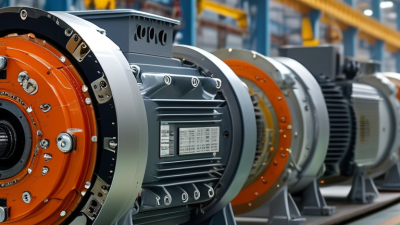
Motors are fundamental to many industries worldwide. They power machinery in manufacturing, transportation, and energy sectors. Different industries have specific motor requirements due to varying operational needs. Understanding these can help optimize performance and energy efficiency.
AC motors are common in industrial applications. They provide consistent speeds and are suitable for conveyor systems. DC motors, on the other hand, excel in applications requiring variable speed control. Robotics commonly uses these motors for precise movement. Stepper motors, which allow for controlled rotation, are essential in automation and 3D printing technologies.
Choosing a motor type isn't always straightforward. Factors such as torque requirements, speed variations, and environmental conditions must be considered. Some buyers may overlook the critical aspect of motor maintenance, which can lead to unforeseen downtimes. A thorough understanding of the operational context is necessary for making informed decisions, ensuring that the selected motor meets both immediate needs and long-term goals.
Best Motors and Control Solutions for Global Buyers
This chart illustrates the distribution of motor types used across various industries worldwide. The data reflects the preference for different motor types based on their applications.
Factors Influencing the Selection of Control Solutions for Motors
When selecting control solutions for motors, various factors come into play. The application environment is crucial. Motors may operate in extreme temperatures or high humidity. Hence, control solutions must withstand these conditions. For instance, some solutions require robust enclosures. Others may need enhanced cooling systems.
Energy efficiency is another key consideration. Many buyers seek options that minimize power consumption. Efficient motors paired with smart control systems can lead to significant savings. However, achieving this balance often requires careful evaluation. Buyers must weigh up-front costs against long-term benefits.
Customization of control solutions is essential. Each project has unique requirements. Some applications require precise speed control, while others focus on torque regulation. This diversity makes standard solutions inadequate. Buyers should assess their specific needs and discuss them with experts. While many options exist, not all might suit every situation. An informed selection process helps mitigate future challenges.
Leading Manufacturers and Brands in the Motors and Control Sector
In the motors and control sector, leading manufacturers are continually innovating. The global market is expected to grow significantly, with research predicting a compound annual growth rate (CAGR) of around 6% by 2026. This growth reflects advancements in automation and energy efficiency, essential for various industries.
Many companies focus on producing high-quality components. They emphasize reliability and performance. Data shows that a well-functioning motor can improve operational efficiency by up to 40%. This is critical in sectors such as manufacturing and transportation. However, the challenge lies in maintaining these high standards consistently.
Choosing the right solutions requires careful consideration. Understanding your unique needs is vital. Assessing factors like power requirements and operating environments can lead to better decisions. Collaborating with industry experts can provide valuable insights. Their experience can help in identifying potential issues before they arise, ensuring smoother operations.
Future Innovations and Challenges in Motor Technologies and Controls
Motor technology is evolving rapidly, driven by innovation and consumer demand. The global market for electric motors is projected to reach USD 155 billion by 2028. This surge reflects interest in energy-efficient solutions. Companies are investing in advanced materials and designs to enhance performance. However, global supply chain challenges could hinder this progress.
Future innovations include smart motors integrated with IoT technology. These motors offer real-time monitoring and predictive maintenance capabilities. According to a recent report, smart motors could reduce energy consumption by up to 30%. Yet, implementing such technologies requires a skilled workforce familiar with both mechanical and software engineering. Finding talent remains a significant hurdle.
Use data analytics to optimize your motor systems. This approach can lead to significant efficiency gains. Regularly review your operations for opportunities to upgrade to smart technologies. The investment in training staff is essential to keep pace with industry changes. Embracing these advancements may not always be straightforward, but it is crucial for long-term success.